

 English
 русский
Are Your Self-Drilling Screws Compliant with ISO or DIN Standards for Construction?
 2026.03.09
 Industry news
In the modern construction landscape, the difference between a project’s success and a costly structural failure often lies in the smallest components: the fasteners. When engineers and contractors specify Self-Drilling Screws for steel framing, metal roofing, or industrial assemblies, they aren’t just looking for “screws”—they are looking for guaranteed mechanical performance. This is where international standards like ISO and DIN come into play.
Compliance with these standards is not merely a bureaucratic formality; it is a vital safety protocol. In high-stakes environments—such as high-rise steel structures or coastal infrastructure—using non-standardized fasteners can lead to catastrophic “shear failure” or rapid corrosion.
Understanding the Framework: ISO vs. DIN Standards
The fastener industry is governed by several overlapping regulatory bodies, but the ISO (International Organization for Standardization) and DIN (Deutsches Institut für Normung) are the most globally recognized benchmarks for precision and quality.
The Global Benchmark: ISO 15480
The primary international standard specifically for self-drilling tapping screws is ISO 15480. This standard is rigorous, covering thread sizes from ST2.9 to ST6.3. It defines the exact geometry of the drill point (often referred to as the “Tek” point in the US market) and the hardness requirements for the tapping threads. Compliance with ISO 15480 ensures that a screw manufactured in Asia will perform with the same reliability as one made in Europe, providing a universal quality language for global supply chains.
The Legacy of Precision: DIN 7504
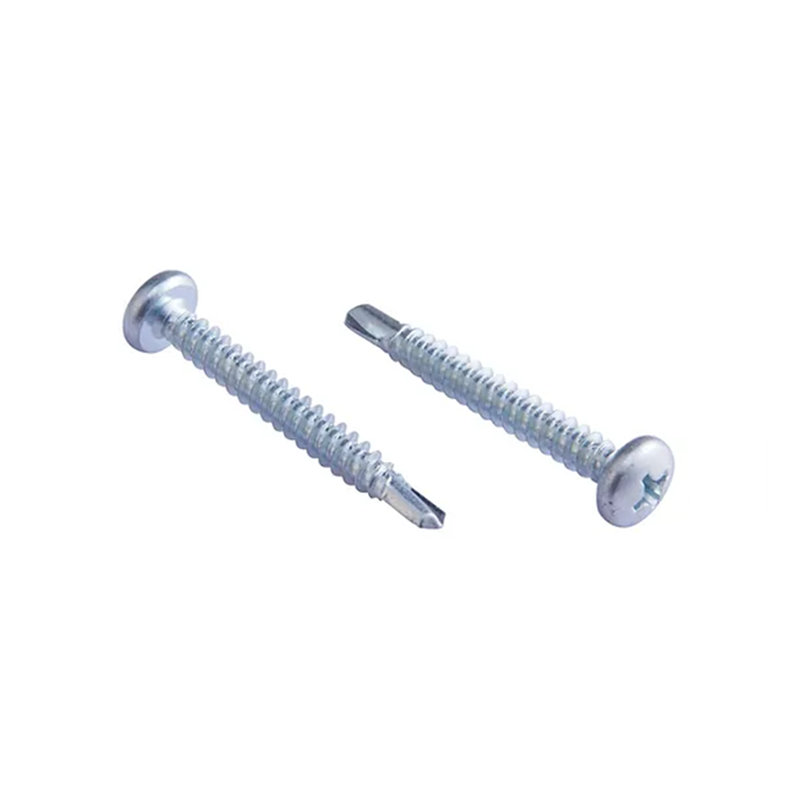
Before the complete harmonization of international standards, the German DIN 7504 standard was the undisputed authority. Even today, many high-end automotive and heavy machinery sectors prefer to specify DIN 7504 (categorized into Type K for hex heads, Type N for pan heads, etc.). DIN standards are famous for their strict dimensional tolerances. While ISO and DIN have become largely aligned over the last decade, DIN remains a “gold standard” for engineers who require absolute precision in metal-to-metal fastening applications where vibration and dynamic loads are constant factors.
Critical Compliance Metrics: What Standards Actually Measure
When a Self-Drilling Screw is labeled as compliant, it has passed a series of destructive and non-destructive tests. These tests ensure the screw can “Drill, Tap, and Fasten” in one continuous motion without failure.
Drilling Capacity and “Point Size” Logic
A compliant screw must be able to pierce a specified thickness of steel within a mandatory timeframe (usually measured in seconds) under a controlled axial load. For instance, a #3 point self-drilling screw is rated to drill through up to 4.5mm of steel. If a screw takes too long to penetrate or the drill point “burns out” (melts due to friction), it fails the ISO/DIN criteria. This is critical for onsite efficiency; a non-compliant screw that takes 5 seconds longer to install can add hundreds of man-hours to a large-scale warehouse project.
Core Hardness vs. Surface Hardness
Standardized screws undergo specialized heat treatment. The “case” or surface of the screw (especially the drill point and threads) must be extremely hard to cut through structural steel. However, the “core” of the screw must remain relatively ductile. Standards like ISO 10666 specify these mechanical properties to prevent “Hydrogen Embrittlement”—a phenomenon where overly brittle screws snap like glass under stress. A compliant screw balances these two extremes, providing the cutting power of a drill bit with the structural toughness of a bolt.
Technical Comparison: Standardized vs. Non-Standardized Fasteners
To help procurement managers visualize the risks, the following table compares a certified self-drilling screw against generic, non-standardized alternatives often found in the market.
Performance Comparison Table: Certified vs. Generic Fasteners
| Performance Metric | ISO/DIN Certified Screw | Generic/Non-Standard Screw |
|---|---|---|
| Material Origin | High-grade Carbon or 304/316 Stainless | Unverified scrap or low-grade carbon |
| Drill Point Geometry | Precision-milled for “fast start” | Irregular shapes; prone to “walking” |
| Thread Tolerance | Consistent pitch for maximum pull-out | Loose fit; high risk of stripping threads |
| Coating Integrity | Verified 500-2000hr Salt Spray (SST) | Thin, uneven plating; rapid “red rust” |
| Traceability | Batch-coded with Mill Test Reports (MTR) | No verifiable origin or testing data |
| Reliability | Rated for load-bearing structural use | Limited to light DIY or non-critical use |
Corrosion Resistance and Environmental Compliance
A fastener is only as good as its coating. In construction, corrosion resistance is a primary safety metric, especially for roofing and cladding where screws are exposed to the elements.
Salt Spray Testing and ISO 9227
Compliance often mandates that screws pass the ISO 9227 salt spray test. For instance, a screw with a high-end “Ruspert” or ceramic coating might be rated for 1,000 hours of salt spray exposure. This is crucial for B2B buyers who need to guarantee the longevity of a building’s envelope. Standardized coatings ensure that the protective layer is applied evenly, preventing “pitting” that could lead to structural leaks or total fastener failure over 10-20 years.
The Bi-Metal Standard for Coastal Areas
For highly corrosive marine environments, standard galvanized steel isn’t enough. Compliance standards define the use of Bi-Metal Self-Drilling Screws. These are premium fasteners where the drill point is made of hardened carbon steel (for drilling power) and the body is made of A2 (304) or A4 (316) stainless steel (for corrosion resistance). By adhering to ISO standards for Bi-Metal welding, manufacturers ensure the two metals won’t separate during the high-torque installation process, a common failure point in low-quality imitations.
Procurement Best Practices: How to Verify Compliance
Ensuring your supply chain is compliant requires a proactive approach to quality assurance. Professional procurement involves more than just checking a price list.
Requesting the Mill Test Certificate (MTC)
A reputable supplier of Self-Drilling Screws will always provide an MTC upon request. This document is the “birth certificate” of the fastener. It details the chemical composition of the steel (Carbon, Manganese, Phosphorus, etc.), the hardness test results, and the torque strength. If a supplier cannot provide a batch-specific MTC that references ISO 15480 or DIN 7504, the fasteners are considered “unverified” and pose a high risk for structural applications.
Visual Inspection and Head Markings
Standardized screws are almost always “head-marked.” This involves a small stamped logo or code on the top of the screw head that identifies the manufacturer and sometimes the grade of steel (e.g., “316” or “8.8”). These markings are vital for site inspectors and insurance adjusters to verify that the materials used in a building meet the original architectural specifications. Always check for clean, sharp thread lines and a symmetrical drill point as a first-line indicator of a quality-controlled manufacturing process.
FAQ: Frequently Asked Questions
Q1: Can I use DIN 7504 screws if the blueprint specifies ISO 15480?
Generally, yes. The two standards are highly harmonized. However, DIN 7504 is often slightly more specific regarding head dimensions. Always verify the “Drill Point” length to ensure it matches your steel thickness requirements.
Q2: What happens if a self-drilling screw is not compliant with ISO 10666?
Without ISO 10666 compliance, the screw is at high risk of “Hydrogen Embrittlement.” This means the screw might look fine during installation but could spontaneously snap 24-48 hours later due to internal stresses.
Q3: Does the “Point Size” (#3, #4, #5) relate to ISO standards?
Yes. While “Point Size” is a common industry term, ISO standards define the specific millimetric drilling capacity for each point geometry. A #5 point, for instance, is compliant for drilling up to 12.5mm (1/2 inch) of steel.
Q4: Is Zinc plating sufficient for outdoor construction compliance?
For temporary structures, yes. For permanent buildings, most standards require at least a Class 3 or Class 4 mechanical galvanization or a ceramic coating to prevent long-term corrosion.
References and Technical Standards
- ISO 15480: Fasteners — Self-drilling tapping screws with tapping screw thread.
- DIN 7504: Self-drilling tapping screws; dimensions, requirements, testing.
- ISO 10666: Drilling screws with tapping screw thread — Mechanical and functional properties.
- ISO 9227: Corrosion tests in artificial atmospheres — Salt spray tests.
- Fastener Technology International: “Standardization as a Safeguard in Modern Architecture,” 2025.
 Get In Touch
From concept to production, we cah create the products you want.
 Products
- · SCREWS
- · HEXAGONAL NUTS
- · THREADED BOLTS
- · EXPANSION ANCHORS & PLUGS
- · WIRE SCREW HOOKS
- · SCREW WASHERS
Contact Information Tel: 86-574-62101087
 E-mail: [email protected]
- E-mail: [email protected]
 Add: Xiaocao 'e Binhai Industrial Park, Yuyao, Zhejiang, China
Copyright 2024 Yuyao Cili Machinery Co., Ltd. All Rights Reserved.
 Custom Drilling Screws Manufacturers
Custom Drilling Screws Manufacturers