

 English
 русский
What Is the Difference Between Expansion Anchors, Wall Plugs, and Sleeve Anchors?
 2026.03.23
 Industry news
In construction, furniture installation, and industrial fastening applications, choosing the right wall fastening system is critical for safety, durability, and load-bearing performance. Three of the most commonly used fasteners are expansion anchors, wall plugs, and sleeve anchors. Although these terms are sometimes used interchangeably, they actually refer to different fastening solutions designed for specific materials such as concrete, brick, drywall, and masonry.
Understanding the differences between these anchoring systems can help contractors, engineers, and DIY installers select the most suitable solution for heavy-duty wall mounting, structural support, and secure installation.
What Are Expansion Anchors?
Basic Definition
Expansion anchors are mechanical fasteners designed to secure objects into solid base materials such as concrete, brick, or stone. They work by expanding inside a drilled hole, creating friction and pressure against the surrounding material.
This expansion mechanism provides strong holding power and high load capacity, making them ideal for heavy-duty installations.
How Expansion Anchors Work
When the anchor bolt is tightened, the anchor body expands outward against the walls of the drilled hole. This expansion creates a firm grip that prevents the fastener from loosening or pulling out under load.
Typical installation steps include:
- Drill a hole into concrete or masonry
- Insert the expansion anchor
- Tighten the bolt or nut
- The anchor expands and locks in place
Common Applications
Expansion anchors are widely used in:
- Structural steel installations
- Machinery mounting
- Handrails and guardrails
- Heavy equipment installation
- Concrete construction projects
These anchors are commonly made from carbon steel, stainless steel, or galvanized steel to ensure corrosion resistance and durability.
What Are Wall Plugs?
Basic Definition
Wall plugs, also known as plastic anchors or drywall plugs, are lightweight fasteners designed to provide additional support when installing screws into softer materials such as drywall, plasterboard, or hollow walls.
Unlike expansion anchors used for concrete, wall plugs are typically made from plastic, nylon, or fiber materials.
How Wall Plugs Work
Wall plugs work by expanding slightly when a screw is inserted. The screw pushes the plug outward, allowing it to grip the surrounding wall material.
This design improves screw holding strength in materials that would otherwise crumble or crack.
Common Applications
Wall plugs are commonly used for:
- Hanging shelves
- Mounting curtain rods
- Installing picture frames
- Attaching light fixtures
- Mounting small cabinets
Because they are designed for light to medium loads, wall plugs are often used in residential installations and interior decoration.
What Are Sleeve Anchors?
Basic Definition
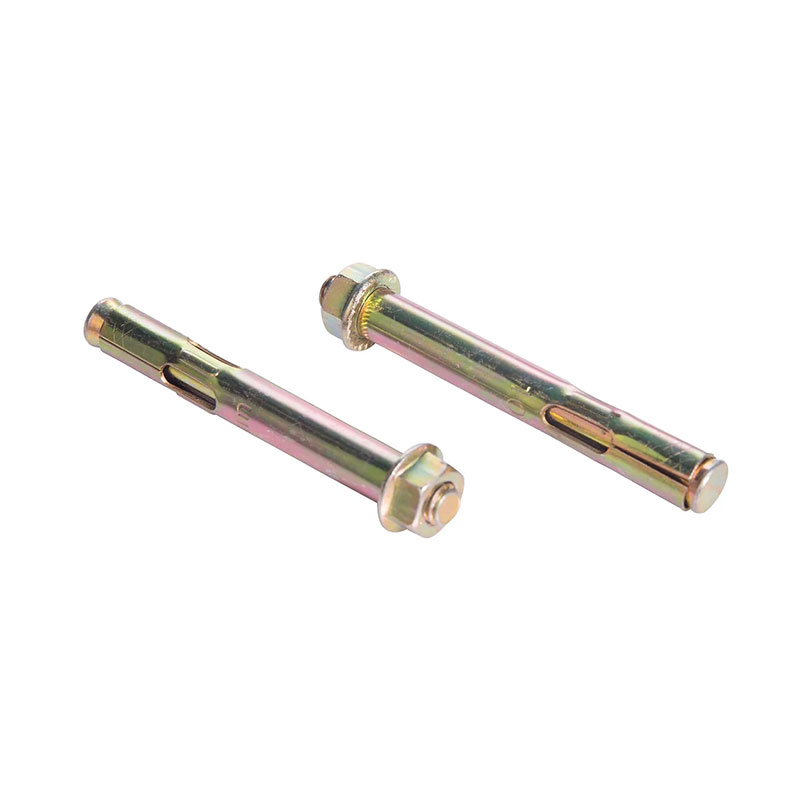
Sleeve anchors are a type of heavy-duty expansion anchor specifically designed for concrete, brick, and block walls. They consist of several components:
- Threaded bolt
- Expansion sleeve
- Nut and washer
The sleeve expands along the length of the anchor when the nut is tightened.
How Sleeve Anchors Work
When the nut is tightened, the bolt pulls upward through the sleeve, causing the sleeve to expand against the walls of the drilled hole. This creates uniform expansion along the entire anchor body, resulting in strong and reliable holding power.
Advantages of Sleeve Anchors
Sleeve anchors offer several benefits:
- Suitable for multiple base materials
- Strong load-bearing capacity
- Easy installation
- Versatile head styles (hex head, flat head, round head)
These anchors are widely used in construction, structural engineering, and industrial mounting applications.
Key Differences Between Expansion Anchors, Wall Plugs, and Sleeve Anchors
| Feature | Expansion Anchors | Wall Plugs | Sleeve Anchors |
|---|---|---|---|
| Typical Material | Steel or stainless steel | Plastic or nylon | Steel or stainless steel |
| Base Material | Concrete, stone, brick | Drywall, plasterboard | Concrete, brick, block |
| Load Capacity | High | Low to medium | Medium to high |
| Installation Method | Expands when bolt tightens | Expands when screw inserted | Sleeve expands along anchor |
| Common Use | Structural mounting | Home decoration | Construction and heavy fixtures |
This comparison highlights that each fastening solution serves a different purpose, depending on the material and load requirements.
Choosing the Right Anchor for Your Project
Selecting the correct anchoring system depends on several factors, including wall material, load requirements, and installation environment.
For Concrete or Masonry
For heavy installations such as machinery, steel structures, or safety railings, expansion anchors or sleeve anchors are the best choice because of their high load capacity.
For Drywall or Hollow Walls
If you are installing lightweight fixtures such as curtain rods or decorative shelves, wall plugs provide sufficient support and are easier to install.
For Medium-Duty Installations
Sleeve anchors are often preferred when working with brick, block, or masonry surfaces, especially when moderate load capacity is required.
Why Expansion Anchors & Plugs Are Essential in Construction
Modern construction and building installation projects rely heavily on reliable fastening systems. Expansion anchors, wall plugs, and sleeve anchors provide:
- Improved safety and structural stability
- Long-term durability in building installations
- Secure mounting for heavy equipment
- Reliable support for interior fixtures
Because of these advantages, they are widely used in construction engineering, infrastructure projects, furniture installation, and industrial manufacturing.
FAQ
What is the strongest type of wall anchor?
For solid materials like concrete, steel expansion anchors or sleeve anchors typically provide the highest load capacity and strongest holding power.
Can wall plugs be used in concrete walls?
Standard plastic wall plugs are not recommended for heavy loads in concrete. Instead, expansion anchors or sleeve anchors should be used for stronger support.
Are sleeve anchors stronger than wall plugs?
Yes. Sleeve anchors are designed for medium to heavy loads in masonry and concrete, while wall plugs are mainly used for light-duty applications in drywall.
How much weight can expansion anchors hold?
The load capacity depends on the anchor size, material, and installation depth, but heavy-duty expansion anchors can support hundreds or even thousands of pounds in solid concrete.
Are stainless steel anchors better than carbon steel anchors?
Stainless steel anchors provide superior corrosion resistance, making them ideal for outdoor environments, marine applications, and humid conditions.
References
- American Concrete Institute (ACI) – Anchoring to Concrete Guide
- International Code Council – Building Fastener Standards
- Construction Fastening Systems Handbook
- Engineering Toolbox – Anchor Bolt Load Capacity Data
- Industrial Fasteners Institute – Mechanical Anchor Design Principles
 Get In Touch
From concept to production, we cah create the products you want.
 Products
- · SCREWS
- · HEXAGONAL NUTS
- · THREADED BOLTS
- · EXPANSION ANCHORS & PLUGS
- · WIRE SCREW HOOKS
- · SCREW WASHERS
Contact Information Tel: 86-574-62101087
 E-mail: [email protected]
- E-mail: [email protected]
 Add: Xiaocao 'e Binhai Industrial Park, Yuyao, Zhejiang, China
Copyright 2024 Yuyao Cili Machinery Co., Ltd. All Rights Reserved.
 Custom Drilling Screws Manufacturers
Custom Drilling Screws Manufacturers