

 English
 русский
HEXAGONAL NUTS: Applications, Selection Criteria, and Practical Guidance
 2026.10.19
 Industry news
Hexagonal nuts are one of those small components that quietly hold a project together. They look simple—six flats, a threaded bore, and a bearing surface—but the difference between a joint that stays tight for years and one that loosens early often comes down to how well the nut was chosen. At Yuyao Cili Machinery, we have spent years producing and supplying fasteners for builders, distributors, and equipment makers, and we still treat every hex nut as a functional part rather than a commodity. This guide walks through the details that matter when you specify hexagonal nuts: dimensions, styles, materials, locking features, and installation habits.
What Makes a Hexagonal Nut More Than a Simple Fastener?
The six-sided shape is practical. It gives a wrench or socket several engagement angles, allows a shorter swing in tight spaces, and provides stable contact under load. A finished hex nut usually has chamfered edges and a smooth bearing face, which helps it sit squarely against a washer or joint surface. For general assembly, that combination is often enough.
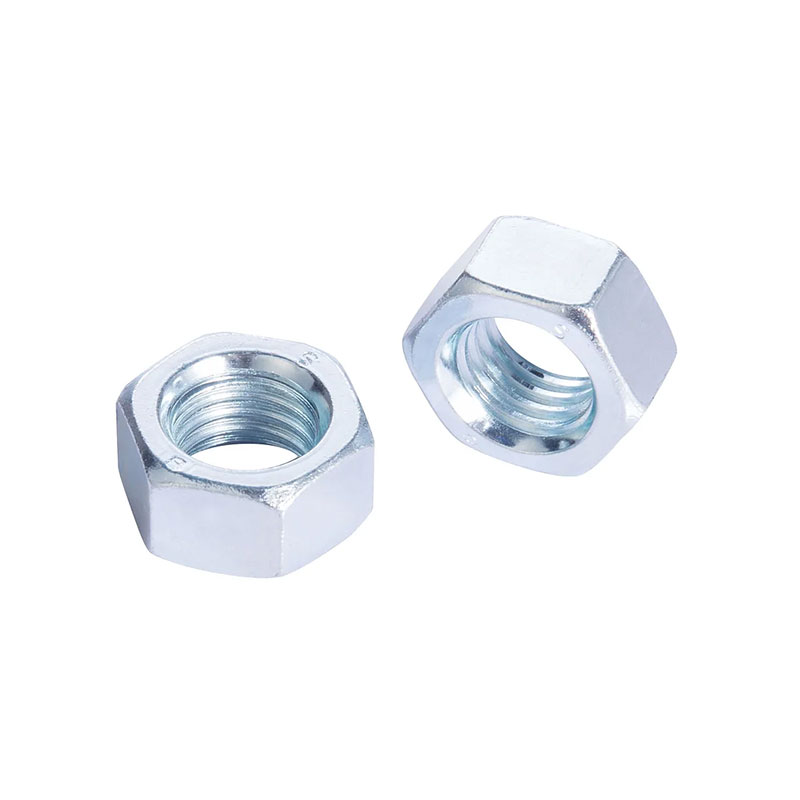 Hex Finished Nuts for General AssemblyView these hex nuts for standard bolted joints, with steel, stainless steel, brass, and nylon options and DIN, ISO, and SAE specifications.View Product →
The nut also works as part of a system. It must match the bolt thread, carry the clamping force without distortion, and resist the environment around it. When the joint carries vibration, high preload, or corrosion exposure, the nut becomes a more specialized component, and small specification choices start to matter more than the initial price.
The Dimensions That Matter: Thread, Width Across Flats, and Height
Three dimensions control most fit and performance questions. The first is thread size and pitch, which must match the bolt. A coarse thread is common in general construction, while a fine thread can offer more precise adjustment and higher tensile stress area in some assemblies. The second is width across flats, because it determines the wrench or socket size and affects bearing area. The third is nut height, which influences thread engagement and load distribution.
- Thread size and pitch: confirm compatibility with the bolt, not just the nominal diameter.
- Width across flats: check tool access and whether a larger nut is needed for load spreading.
- Nut height: more height can improve thread engagement, but it must suit the joint design.
- Bearing surface and chamfer: a clean, square face helps prevent bending and uneven pressure.
Standards such as ISO 4032 for style 1 hex nuts, ISO 4033 for style 2, and ASME B18.2.2 provide useful dimensional references. They are a starting point, not a complete specification. A practical purchase order should also state property class, coating, inspection requirements, and any application limits that affect the joint.
Common Hexagonal Nut Types and Where They Fit
Not every hexagonal nut is interchangeable. Different styles solve different problems, from general clamping to vibration resistance and structural loading. The table below gives a practical overview.
| Nut style | Defining feature | Typical use |
|---|---|---|
| Finished hex nut | Standard proportions with chamfered edges | General machinery, brackets, and assembly work |
| Heavy hex nut | Larger across flats and heavier section | Structural connections and higher-load joints |
| Hex flange nut | Integrated flange spreads clamping pressure | Sheet metal, brackets, and uneven surfaces |
| Nylon insert lock nut | Nylon collar grips the threads | Equipment subject to vibration or adjustment |
| All-metal lock nut | Metal deformation creates prevailing torque | Higher-temperature or non-nylon applications |
| Hex jam nut | Thin profile for locking against another nut | Adjustment screws, linkages, and tight spaces |
| Cap nut | Closed dome covers the exposed thread | Visible fittings and protection from thread damage |
| Coupling nut | Long body joins two threaded rods | Hangers, tie rods, and suspended assemblies |
| Slotted or castle nut | Slots allow a cotter pin to secure the joint | Machinery where controlled play or pinning is required |
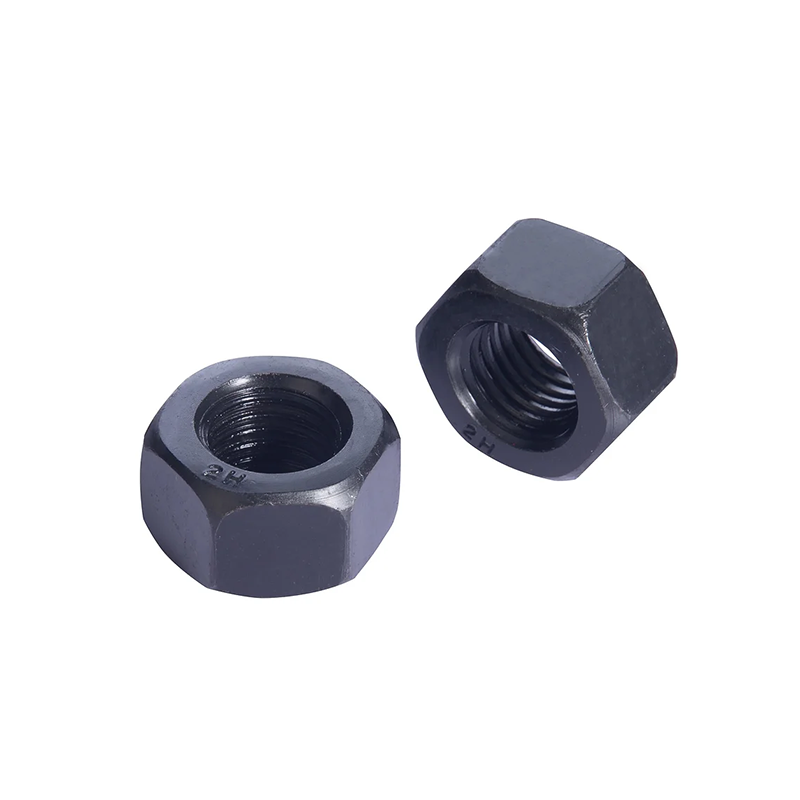 Heavy Hex Nuts for Structural and High-Load JointsReview heavy hex nuts where a larger body spreads load and matches heavy hex bolts, with ASTM, DIN, and grade options for high-stress connections.View Product →
For structural work, heavy hex nuts are often chosen because the larger body spreads load and suits matching heavy hex bolts. For lighter assemblies, a finished hex nut may be all that is needed. The right choice begins with the joint, not with the nut alone.
Locking, Vibration, and Joint Security
Vibration loosening is rarely caused by a single bad nut. It usually develops when clamp load is insufficient, the joint is too flexible, or the contact surfaces settle. A nylon insert lock nut adds friction on the threads and is widely used in equipment, shelving, and adjustable assemblies that see movement. All-metal prevailing torque nuts can be a better fit when heat or chemical exposure would damage nylon.
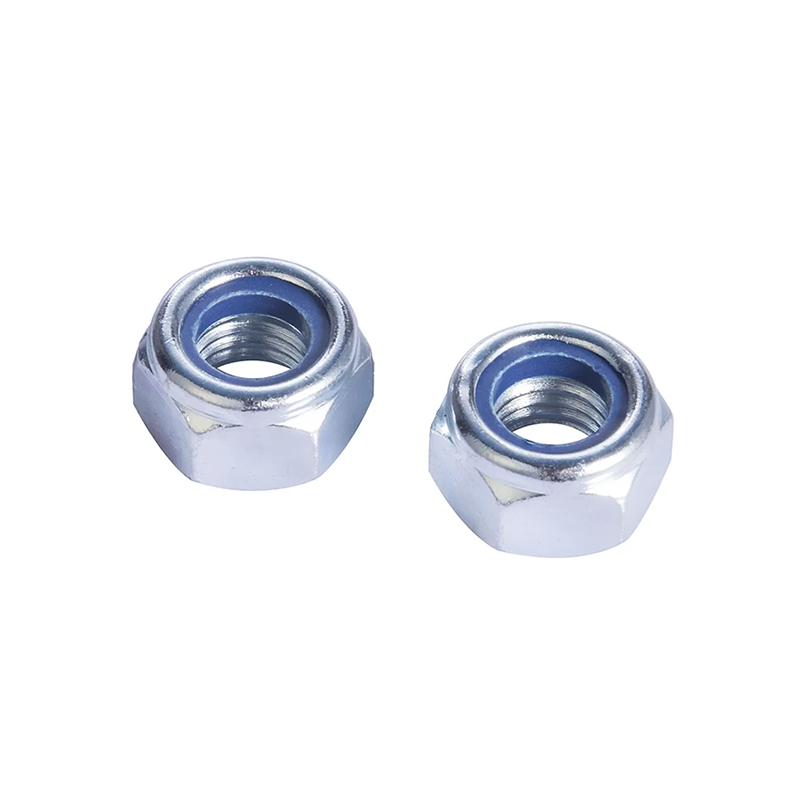 Nylon Insert Lock Nuts for Vibration-Prone AssembliesCheck nylon insert lock nuts for added thread friction in adjustable or moving equipment, with DIN and ASME norms, grades, and zinc plating.View Product →
Locking features should support the design, not replace good preload. If a joint needs a specific torque, a particular surface finish, or repeated disassembly, say so before the order is placed. That avoids choosing a nut that holds well on the first assembly but becomes difficult to reuse or inspect.
Material and Finish Choices for Real-World Conditions
Carbon steel remains the most common material for hexagonal nuts because it offers a practical balance of strength and cost. Depending on the application, nuts may be supplied in property classes that match the bolt, such as class 8 or class 10. Stainless steel is useful where corrosion resistance matters, while zinc plating, hot-dip galvanizing, and other coatings help protect carbon steel in outdoor or humid service.
Finish choice affects more than appearance. Coating thickness can change thread fit and friction, which in turn changes the torque needed to reach a given clamp load. For a reliable assembly, specify the bolt, nut, washer, and coating as a set rather than treating each item separately. This is especially important in coastal, industrial, or outdoor projects where corrosion and maintenance access influence the design life.
Matching Hex Nuts with Bolts and Washers
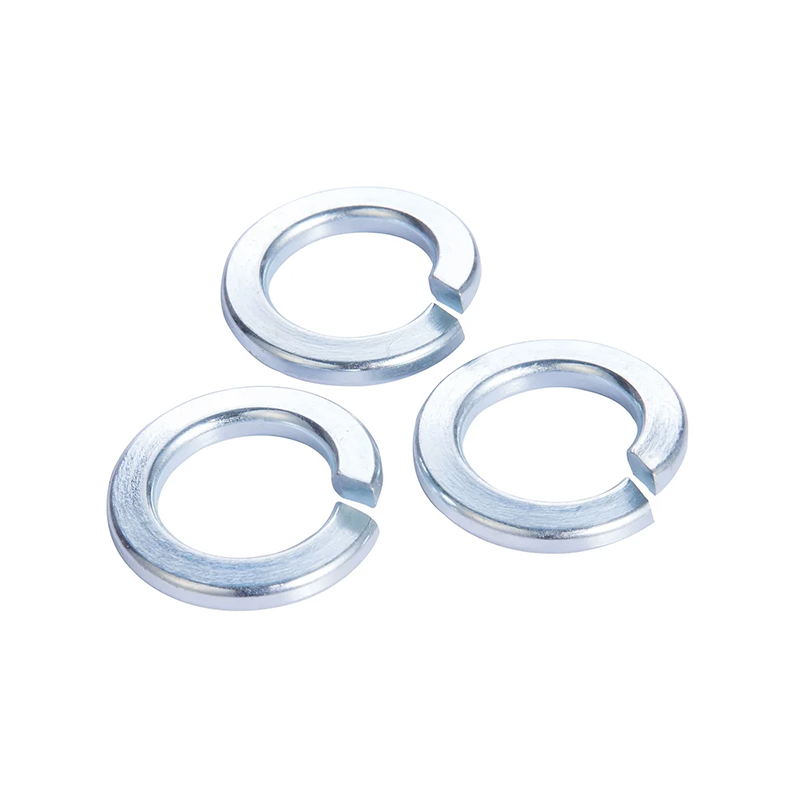
A nut should be compatible with the bolt in thread, strength, and finish. Mixing a high-strength bolt with a lower-grade nut can shift failure to an unexpected part of the joint. Washers also play a role by spreading pressure and protecting the joint surface. When vibration or relaxation is a concern, reviewing how tooth lock washers disperse pressure can help you evaluate the full fastener stack rather than the nut in isolation.
Thread engagement is another practical check. Too little engagement reduces load capacity; excessive engagement may add cost without meaningful benefit. A joint that is easy to assemble, inspect, and maintain is usually one where the bolt, nut, and washer were considered together from the beginning.
Installation and Inspection: Small Habits That Prevent Failures
Good fastening starts before the wrench turns. Clean threads, correct mating parts, and a flat bearing surface prevent many common problems. During installation, the following habits make a measurable difference:
- Confirm that the nut and bolt share the same thread form and pitch.
- Use the specified torque value and account for lubrication or coating friction.
- Seat washers squarely and avoid overhanging the joint surface.
- Check that the nut can run down by hand before final tightening.
- Inspect a sample after assembly for thread damage, galling, or incomplete seating.
For critical joints, inspection should continue after the equipment enters service. A quick check after the first operating cycle can reveal settling before it becomes a safety issue. The goal is not to over-tighten every nut, but to create a joint that maintains its clamp load predictably.
From Standard Hex Nuts to Custom Fastener Supply
At Yuyao Cili Machinery, we are based in Yuyao, Zhejiang, and serve customers who need dependable fasteners rather than a catalog guess. Our product range includes screws, bolts, nuts, washers, anchors, and wire hooks, and our factory covers 15,000 square meters with a reported monthly output of around 1,000 tons. We work under an ISO 9001-2008 quality management system and can produce from customer samples or drawings when a standard part does not fit the application.
That flexibility matters for buyers comparing standard hexagonal nuts with custom requirements. Sometimes a slight change in height, thread, or coating solves an assembly problem that a standard part cannot. You can learn more about our fastener manufacturing and the categories we supply, or send a drawing with the details that control fit and performance. We will help you narrow the options without making the specification more complicated than it needs to be.
Hexagonal nuts rarely attract attention when they work well, and that is the point. A sensible specification, a compatible bolt, and a clean installation do more for reliability than a long list of features. Whether the project calls for a standard finished nut, a heavy hex nut for structural loading, or a locking nut for a vibrating assembly, the best result comes from matching the nut to the joint and checking the details that keep it secure.
 Get In Touch
From concept to production, we cah create the products you want.
 Products
- · SCREWS
- · HEXAGONAL NUTS
- · THREADED BOLTS
- · EXPANSION ANCHORS & PLUGS
- · WIRE SCREW HOOKS
- · SCREW WASHERS
Contact Information Tel: 86-574-62101087
 E-mail: [email protected]
- E-mail: [email protected]
 Add: Xiaocao 'e Binhai Industrial Park, Yuyao, Zhejiang, China
Copyright 2024 Yuyao Cili Machinery Co., Ltd. All Rights Reserved.
 Custom Drilling Screws Manufacturers