

 English
 русский
Threaded Hex Bolts: Full vs Partial Thread, Sizes, Grades, and How to Choose
 2026.10.26
 Industry news
Walk through almost any workshop, warehouse, or building site and you will find them: threaded hex bolts sorted into bins, tucked into tool bags, and holding together the things people rely on every day. They are not the most glamorous fastener on the shelf, but they are among the hardest working.
We are Yuyao Cili Machinery, a fastener manufacturer based in Yuyao, Zhejiang. Our shop floor runs from wire drawing and annealing through cold heading and thread rolling, and hex bolts sit alongside the screws, nuts, washers, and anchors we produce every month. This article gathers what we have learned about threaded hex bolts — how they are made, where the differences matter, and what to check before you order.
What Exactly Is a Threaded Hex Bolt?
A threaded hex bolt is a fastener with a six-sided head and a cylindrical shank that carries a helical thread. The head is measured across the flats, which is why a standard socket or spanner fits it cleanly without slipping.
The word "threaded" is doing quiet work in that name. It tells you the shank is threaded rather than a smooth pin, and in everyday purchasing it usually means the bolt belongs to one of two families: fully threaded hex bolts or partially threaded hex bolts. Both share the same hex head, the same basic manufacturing route, and the same job — clamping parts together so they stay put.
Full Thread or Partial Thread?
This is the first question we ask when a customer sends a drawing, because it changes both the manufacturing route and the way the bolt behaves in service.
Fully threaded hex bolts
On a fully threaded bolt, the thread runs from the tip right up to the underside of the head. That gives you a nut that can sit anywhere along the shank, which is genuinely useful when clamping thicknesses vary, when you are joining thin sheets, or when the bolt passes through a stack of parts and the nut needs to land wherever it can. The trade-off is that thread runs through the shear plane of the joint, and thread roots are natural stress raisers.
Partially threaded hex bolts
A partially threaded bolt leaves a smooth, unthreaded shank just below the head. That smooth section can sit in the hole like a dowel, taking shear load through solid material instead of through a thread root, which is why partial thread is often the better choice for joints loaded sideways. It also gives a longer, more controlled grip length when the bolt is doing structural work.
A simple rule we share with customers: if the joint is loaded in shear through the shank, lean toward partial thread; if you need flexibility in clamping thickness or you are working with thin material, full thread is usually the practical answer.
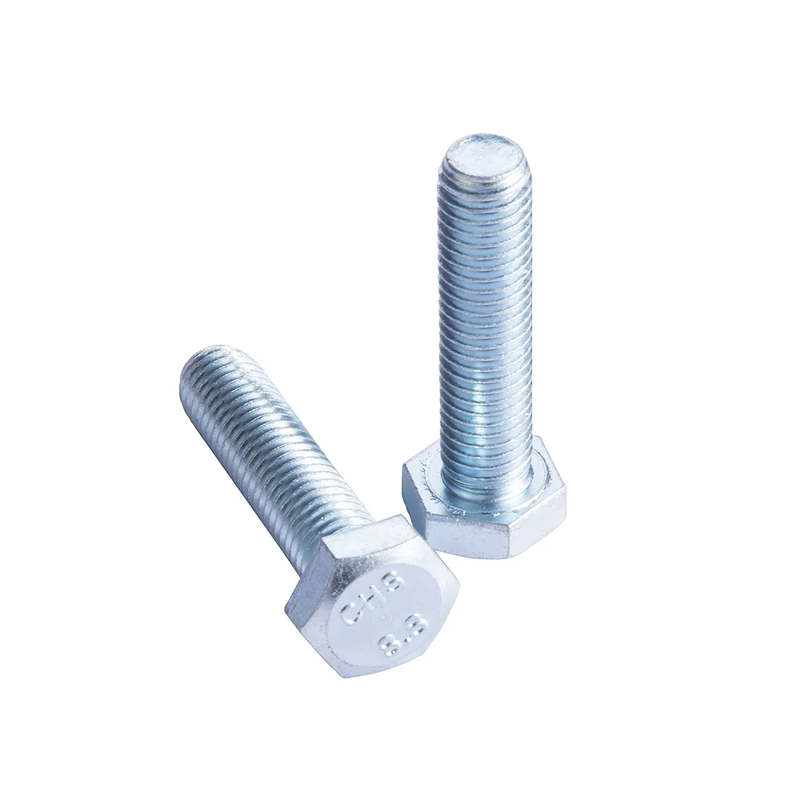 Full Thread Hex Bolt for Flexible ClampingFully threaded hex bolt suits thin material or flexible clamping thickness, with a hex head for wrench tightening and uniform connection force.View Product →
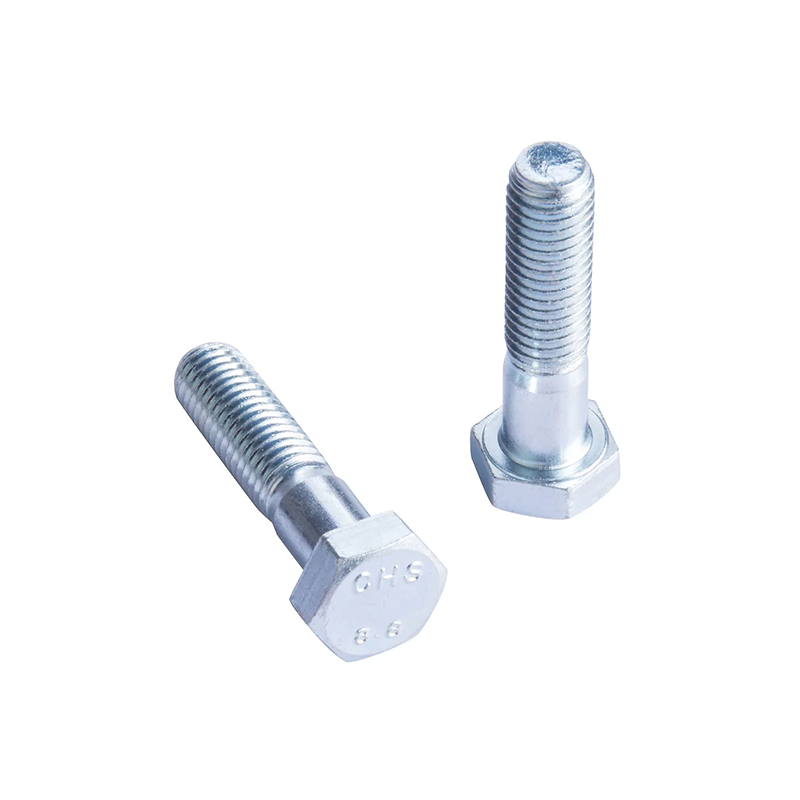 Partial Thread Hex Bolt for Shear-Loaded JointsPartial thread leaves a smooth shank for shear-loaded joints and floating space during alignment, while the hex head allows convenient tightening and maintenance.View Product →
Materials, Grades, and Finishes
Most threaded hex bolts are made from carbon steel or alloy steel, and the property class tells you roughly what the bolt can take. In the metric system, the number before the dot is one hundredth of the minimum tensile strength in MPa, and the number after the dot is the ratio of yield to tensile strength. A class 8.8 bolt, then, has a minimum tensile strength of around 800 MPa and a yield around 80 percent of that. Classes 8.8 and 10.9 cover most general engineering work, while 12.9 is reserved for higher-strength applications where the joint design supports it.
When corrosion matters more than raw strength, stainless steel takes over. A2 (grade 304) handles general outdoor and mildly corrosive environments, while A4 (grade 316) is the choice near salt water or chemical exposure. Brass hex bolts appear in electrical and decorative work.
Finishes matter as much as the base metal. Clear or yellow zinc plating is the everyday option for indoor and sheltered use. Hot-dip galvanizing gives a much thicker, more durable coating for outdoor structures, but it adds material to the threads, so matching nuts are often tapped slightly oversize. One thing we always flag: high-strength bolts that are electroplated need careful process control, because hydrogen absorbed during plating can cause embrittlement later.
Sizes and Thread Pitch
Metric hex bolts are specified by nominal diameter and thread pitch — M10 x 1.5, for example. The table below covers the coarse-thread sizes we produce most often.
| Nominal size | Coarse thread pitch | Width across flats (ISO) | Common property classes |
|---|---|---|---|
| M6 | 1.0 mm | 10 mm | 8.8 |
| M8 | 1.25 mm | 13 mm | 8.8 |
| M10 | 1.5 mm | 16 mm | 8.8, 10.9 |
| M12 | 1.75 mm | 18 mm | 8.8, 10.9 |
| M16 | 2.0 mm | 24 mm | 8.8, 10.9 |
| M20 | 2.5 mm | 30 mm | 8.8, 10.9 |
Two notes that save a lot of back-and-forth. First, width across flats changed between older DIN drawings and current ISO standards — an M10 head measures 17 mm on the older DIN drawing but 16 mm under ISO, and M12 goes from 19 mm to 18 mm. If your socket set was bought for one standard, mention it when ordering. Second, thread pitch is not just a compatibility detail; it changes how the bolt grips and how it behaves under high tension. We went into that in more depth in our note on how thread pitch affects grip and performance in high-tension applications.
Where Threaded Hex Bolts Earn Their Keep
Because the hex head is easy to drive and the bolt can be tightened from one side with a nut on the other, threaded hex bolts turn up almost everywhere:
- Structural steel frames, base plates, and column connections, where heavy hex bolts and hardened washers do the work.
- Machinery and equipment assembly, from pump bases to conveyor frames.
- Guardrails, handrails, and fencing, where a bolt has to hold alignment and survive the weather.
- Roofing and cladding systems, often paired with sealing washers so the fixing stays watertight.
- Pipe supports, brackets, and hangers, where adjustment range matters during installation.
- Wood and timber connections, including hanger bolts and lag-style fixings for decking and framing.
- Vehicle, trailer, and agricultural equipment repair, where standard sizes need to be on hand.
Nuts, Washers, and Matching Hardware
A bolt is only half a joint. Matching the nut and washer to the bolt protects the thread, spreads the load, and keeps the assembly from loosening.
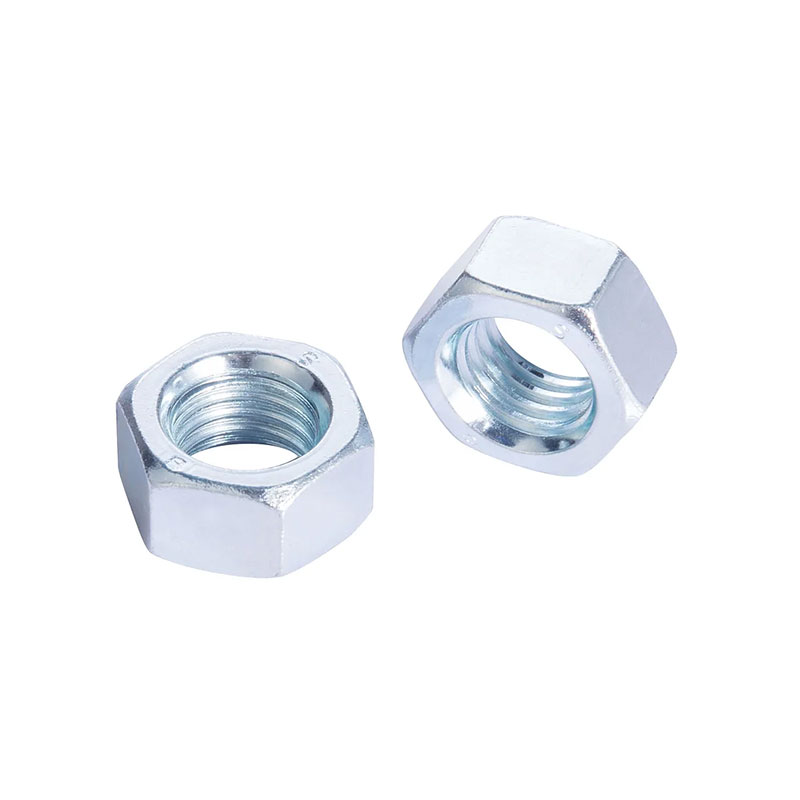
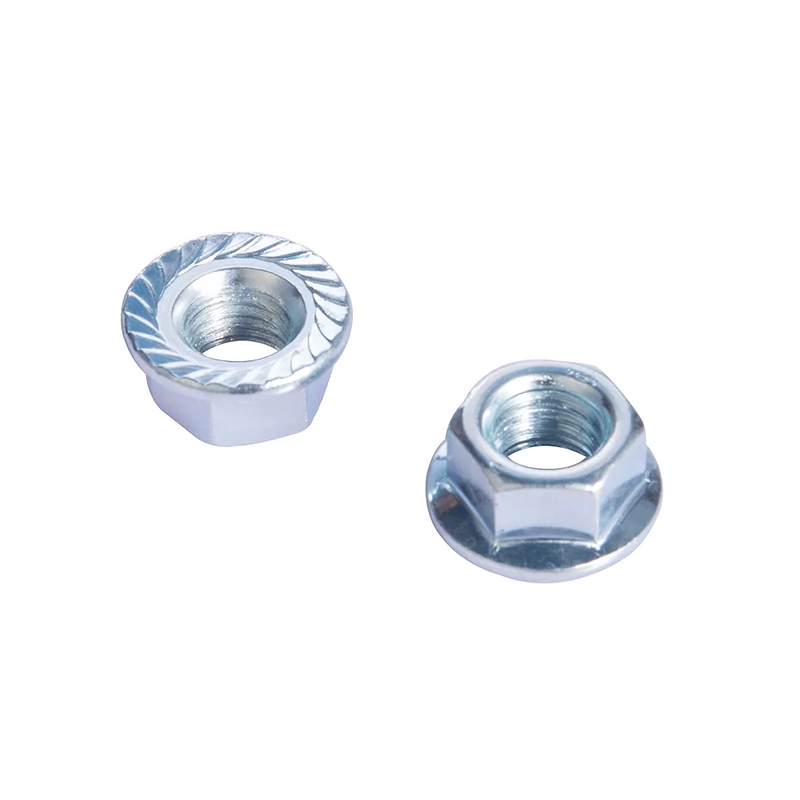
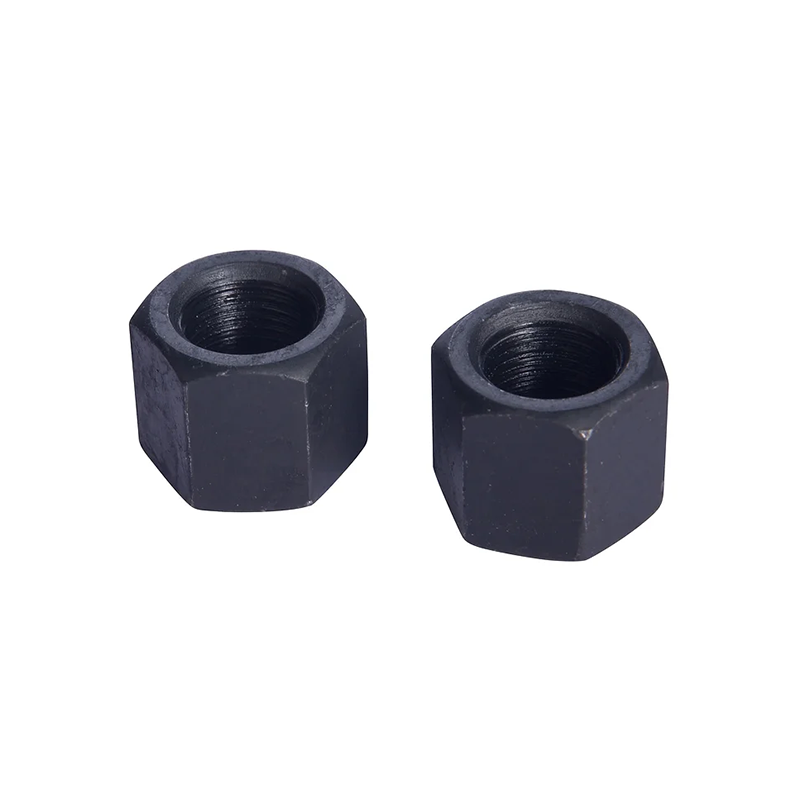
On the nut side, plain finished hex nuts suit general work, while heavy hex nuts are matched to structural bolts because their larger body spreads load better. Where vibration is a concern, nylon insert lock nuts or all-metal prevailing torque nuts hold their position far better than a plain nut. Property class matters here too: a class 8 nut is the normal partner for a class 8.8 bolt, and a class 10 nut for a class 10.9 bolt.
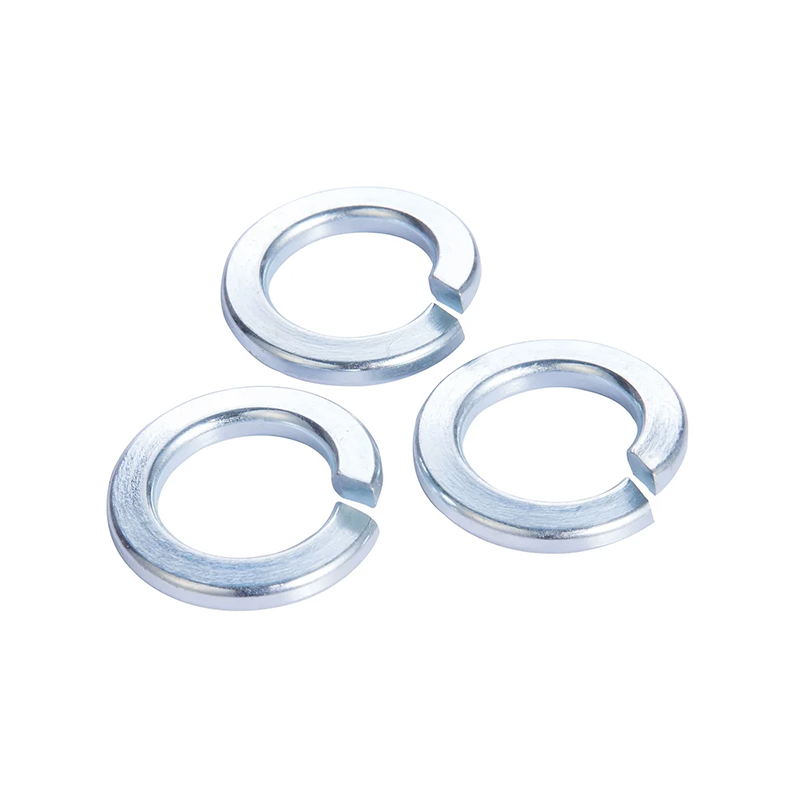
Washers do the quieter job. A flat washer protects the surface and spreads the clamping load; a hardened structural washer is specified for high-strength connections; spring lock and tooth lock washers add resistance to vibration. For heavier structural work, we also produce heavy hex structural bolts, which pair naturally with the larger nuts and hardened washers described above.
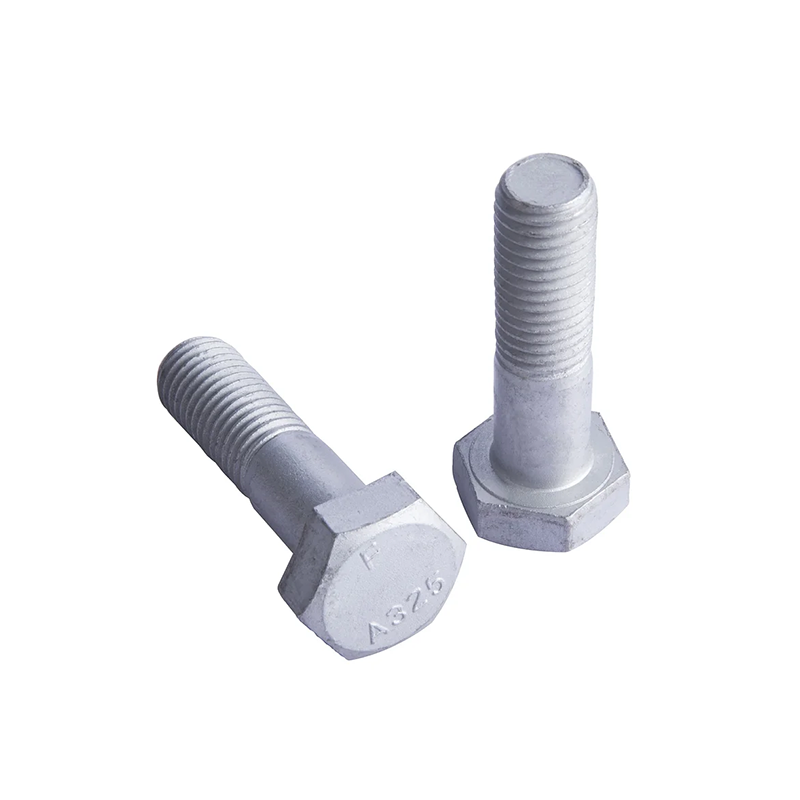 Heavy Hex Structural Bolt for High-Strength ConnectionsHeavy hex structural bolt to ASTM A325/A490 and DIN6914 in Type 1 and Gr.10.9, available in black or HDG for structural connections.View Product →
Installation Notes From the Shop Floor
- Match the hole to the job. Clearance holes should be slightly larger than the nominal diameter; if the shank is meant to carry shear, the hole should match the shank, not the thread.
- Put a washer under the turning face when the material underneath is soft or easily marked.
- Torque to the grade, not to feel. A class 12.9 bolt overtightened by hand can fail well before it looks stressed.
- Remember that lubrication changes everything. Plated or lubricated threads reach the same preload at a lower torque, so a figure taken from a dry test can over-stretch a lubricated bolt.
- Check the joint after it settles. Re-tensioning a week later is normal practice on structural and machinery work.
- Slow down with stainless on stainless. Galling is common when two stainless surfaces rub under load, so a suitable anti-seize compound helps.
Custom Threaded Hex Bolts and Manufacturing Support
Our factory covers 15,000 square metres in Yuyao, with more than 200 staff and a monthly output of around 1,000 tonnes. We hold ISO 9001 certification and run the main processes in house — wire drawing, annealing, cold heading, trimming, and thread rolling — which means we control the thread form rather than buying it in.
If you have a sample or a drawing, we can work from it: diameter, pitch, length, head dimensions, grade, and finish. Alongside hex bolts, we produce threaded rods, studs, U-bolts, and T-bolts, plus the nuts and washers that go with them, so a single order can cover the whole joint. Send us the specification and quantity and we will come back with a practical answer.
Quick Answers
What is the difference between a threaded hex bolt and a hex screw?
The two terms overlap in everyday use. In general, a screw is driven into the material itself, while a bolt passes through the parts and is secured with a nut on the far side.
Do threaded hex bolts need washers?
Not always, but a flat washer spreads the load and protects the surface, and hardened structural washers are specified for high-strength joints.
Can threaded hex bolts be reused?
If the threads and head are undamaged and the bolt was not tensioned to yield, yes. Bolts that have been stretched deliberately should be replaced.
Hex bolts are simple objects, but the details behind them — thread form, grade, finish, and the hardware they pair with — decide whether a joint lasts one season or twenty. Tell us the size, grade, finish, and quantity you need, and we will help you get it right the first time.
 Get In Touch
From concept to production, we cah create the products you want.
 Products
- · SCREWS
- · HEXAGONAL NUTS
- · THREADED BOLTS
- · EXPANSION ANCHORS & PLUGS
- · WIRE SCREW HOOKS
- · SCREW WASHERS
Contact Information Tel: 86-574-62101087
 E-mail: [email protected]
- E-mail: [email protected]
 Add: Xiaocao 'e Binhai Industrial Park, Yuyao, Zhejiang, China
Copyright 2024 Yuyao Cili Machinery Co., Ltd. All Rights Reserved.
 Custom Drilling Screws Manufacturers