

 English
 русский
How Do You Choose the Right Thread Pitch for Hex Bolts in High-Vibration Applications?
 2026.05.11
 Industry news
For high-vibration applications, fine thread pitch hex bolts are generally the better choice over coarse thread — they provide greater resistance to self-loosening due to a shallower helix angle, higher thread engagement surface area, and better clamping force retention under cyclic loading. However, thread pitch alone does not determine joint integrity. The correct answer depends on the combination of thread pitch, clamping force, locking method, and material — and getting any one of these wrong can lead to bolt loosening, fatigue failure, or joint separation.
Why Thread Pitch Matters More in Vibration Environments
Thread pitch determines the helix angle of the thread — the steepness of the spiral that converts torque into clamping force. In a static application, coarse and fine threads perform similarly once properly torqued. In a vibration environment, the helix angle becomes critical because vibration creates lateral micro-movements between mating threads, and a steeper helix angle (coarse thread) makes it easier for those movements to drive the nut or bolt backward along the thread path.
This phenomenon — known as rotational self-loosening — was systematically studied by Gerhard Junker in the 1960s. His research showed that transverse vibration (perpendicular to the bolt axis) is the primary driver of loosening, and that reducing the helix angle directly reduces the loosening torque generated by vibration. Fine threads have a helix angle of roughly 1.5°–2° compared to 2.5°–3.5° for coarse threads in the same diameter range — a difference that significantly affects self-loosening resistance.
Coarse vs Fine Thread: A Direct Comparison for Vibration Applications
| Property | Coarse Thread (UNC / Metric Standard) | Fine Thread (UNF / Metric Fine) |
|---|---|---|
| Helix angle | Higher (~2.5°–3.5°) | Lower (~1.5°–2°) |
| Self-loosening resistance | Lower | Higher |
| Clamping force at same torque | Lower | Higher (~10–15% more) |
| Thread engagement area | Larger per turn | More turns per unit length |
| Sensitivity to cross-threading | Lower | Higher (requires careful alignment) |
| Fatigue strength | Slightly lower | Slightly higher (smaller thread root stress) |
| Assembly speed | Faster | Slower |
| Performance in soft materials (aluminum, plastic) | Better (less strip-out risk) | Strip-out risk if torque is not controlled |
Specific Thread Pitch Values and When to Use Them
Thread pitch is expressed as threads per inch (TPI) in imperial systems and millimeters per thread in metric. Higher TPI or smaller mm pitch = finer thread. Here are the most common options for a M12 metric hex bolt as a reference:
- M12 × 1.75 (coarse): Standard general-purpose pitch. Suitable for construction, non-critical machinery, and static or low-vibration joints. Fast assembly, tolerant of minor thread damage.
- M12 × 1.5 (fine): First choice for most vibration-critical joints in steel structures, automotive chassis, and industrial equipment. Approximately 12% higher proof load clamp force compared to M12 × 1.75 at the same tightening torque.
- M12 × 1.25 (extra fine): Used in precision mechanical assemblies, aerospace fasteners, and thin-walled components where maximum thread engagement per unit length is needed. Less common in standard hex bolt stock.
- M12 × 1.0 (ultra fine): Specialist application — instrument housings, optical equipment mounts, or any joint where micro-adjustment and maximum resistance to any axial movement is required.
For imperial UNC/UNF hex bolts, a ½-inch bolt illustrates the same principle: ½-13 UNC (13 TPI, coarse) vs ½-20 UNF (20 TPI, fine). The UNF version generates roughly 8–12% more clamping force at the same torque and is the standard selection in automotive and aerospace structural joints subject to vibration.
How Vibration Frequency and Amplitude Should Influence Your Choice
Not all vibration environments are equal. The severity of loosening risk depends on two factors: vibration frequency and transverse displacement amplitude.
Low Frequency, High Amplitude (e.g., 5–50 Hz, heavy machinery, compressors)
This is the most dangerous regime for self-loosening. Each vibration cycle produces significant transverse slip at the thread interface. Fine thread alone is insufficient — you need fine thread combined with a positive locking method such as a prevailing torque nut, thread-locking adhesive, or a serrated flange bolt.
High Frequency, Low Amplitude (e.g., 100–1000 Hz, engine vibration, turbines)
At these frequencies, individual slip amplitudes are small, and the primary failure mode shifts from loosening to fatigue fracture at the thread root. Fine thread's slightly smaller thread root radius reduces stress concentration, giving it a modest fatigue life advantage. Thread form quality and surface finish become more important than pitch selection alone.
Resonance Conditions
If the operating frequency approaches the natural frequency of the bolted joint or structure, loosening risk increases dramatically regardless of thread pitch. In these cases, joint stiffness analysis and structural modification should be prioritized alongside fastener selection — no thread pitch choice fully compensates for a resonating joint.
Thread Pitch Is Not Enough: Locking Methods That Work With Fine Threads
In any high-vibration application, thread pitch selection should be paired with an appropriate locking strategy. The following methods are ranked by effectiveness for severe vibration conditions:
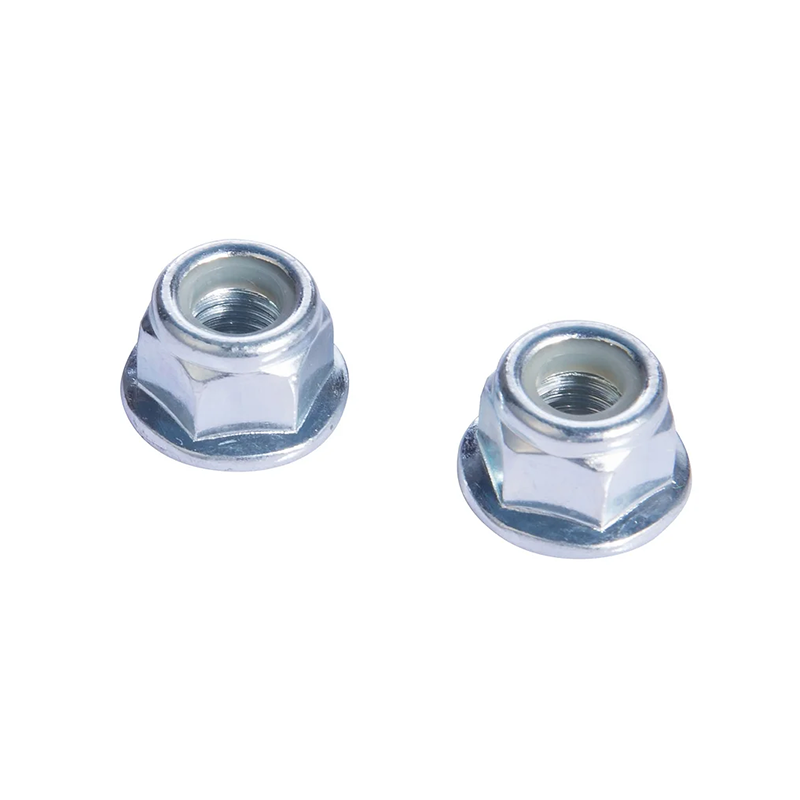
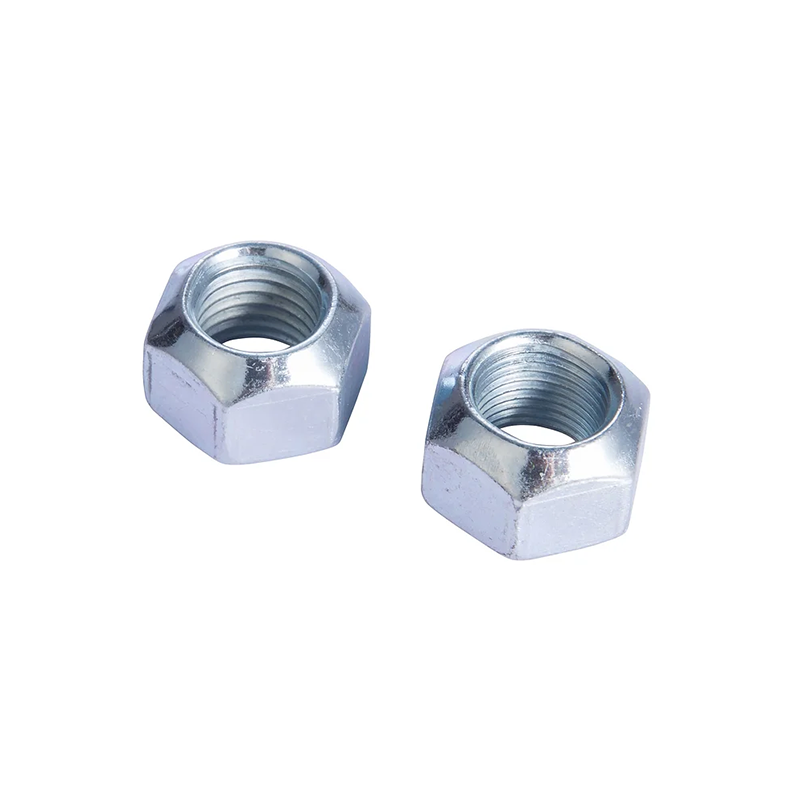
- Prevailing torque nuts (nylon insert / all-metal deformed thread): The most reliable mechanical locking method. All-metal prevailing torque nuts (e.g., DIN 980) are preferred over nylon insert types (e.g., DIN 985) when temperatures exceed 120°C or in oil-contaminated environments.
- Thread-locking adhesive (e.g., Loctite 243 medium, Loctite 270 high strength): Fills micro-gaps between threads, preventing relative motion. Highly effective for fine thread bolts in moderate vibration; requires controlled application and cure time. Medium-strength (removable) for maintenance-accessible joints; high-strength for permanent joints.
- Serrated flange bolts or nuts: The serrated bearing face bites into the joint surface, creating mechanical resistance to rotation. Simple and effective for steel-to-steel joints. Not suitable for soft substrates like aluminum or coated surfaces.
- Double-nut (jam nut) method: A correctly applied jam nut locks the primary nut through opposing thread face contact. Effective when done correctly, but frequently misapplied in the field — the jam nut must be tightened against the primary nut in the correct sequence.
- Safety wire / mechanical tab washers: Physical prevention of rotation. Used in aerospace and motorsport where inspection cycles are defined. Labor-intensive but fail-safe.
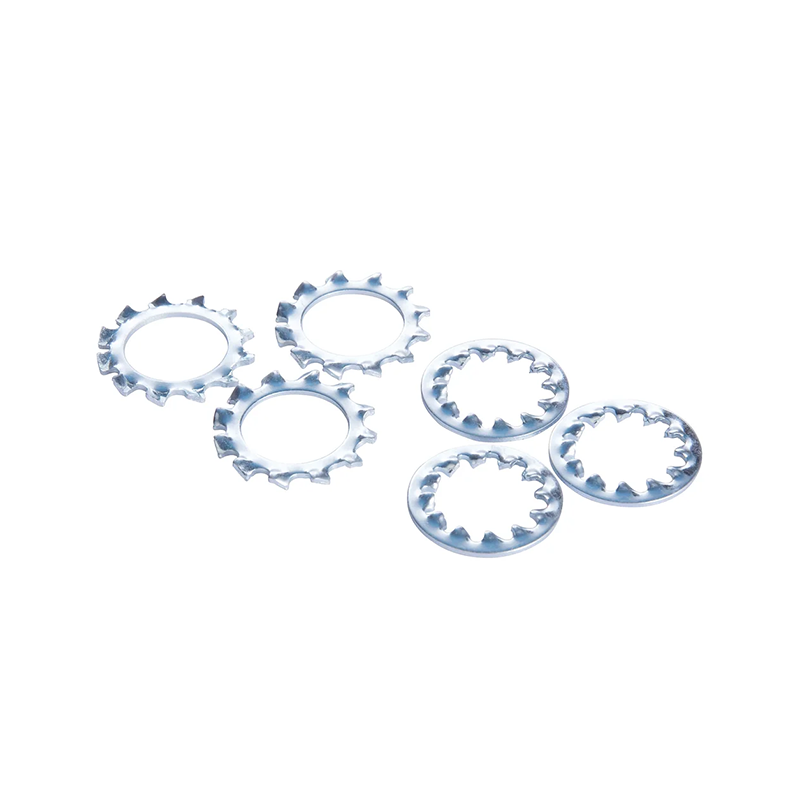
Standard spring washers (split lock washers) are not recommended for high-vibration applications. Research — including Junker testing — consistently shows they provide negligible loosening resistance once the bolt has been properly torqued and the washer has flattened.
Material and Coating Considerations That Affect Thread Pitch Performance
The substrate material into which the hex bolt threads changes the optimal pitch selection:
- Steel-to-steel joints: Fine thread is the clear choice for vibration resistance. Full thread engagement depth is achievable with standard nut height.
- Aluminum tapped holes: Fine thread increases the risk of thread strip-out in aluminum because the shallower thread depth per turn puts more shear stress on each tooth. Use coarse thread with increased engagement length (minimum 1.5× bolt diameter) or a thread insert (Helicoil) to restore effective engagement.
- Cast iron: Brittle and prone to thread damage during assembly. Coarse thread is safer for installation; if vibration resistance is critical, use thread inserts and adhesive rather than relying solely on fine pitch.
- Hot-dip galvanized bolts: The zinc coating adds 50–80 μm per surface, which effectively reduces thread clearance. Fine thread bolts with HDG coating may require oversized nuts (Class 4 or 6H tolerance) to assemble without galling. Verify fit before specifying fine thread HDG hex bolts.
Practical Selection Checklist for High-Vibration Hex Bolt Joints
- Identify vibration type: transverse (lateral) vibration demands fine thread most urgently; axial vibration is less critical for pitch selection.
- Select fine thread (UNF or metric fine) as the default for steel-to-steel vibration joints above 20 Hz.
- Verify thread engagement length: minimum 1× bolt diameter in steel, 1.5× in aluminum, 2× in cast iron.
- Pair thread pitch with an appropriate locking method — prevailing torque nut or thread-locking adhesive for most industrial applications.
- Calculate and apply correct tightening torque — under-torquing is the single most common cause of vibration loosening, regardless of thread pitch.
- Specify bolt grade to match clamping force requirements: Grade 8.8 minimum for most structural vibration joints; Grade 10.9 where higher preload is needed.
- For coated bolts (zinc, HDG, Dacromet), adjust torque values — coating friction coefficients differ from bare steel and affect actual clamp force achieved at a given torque.
 Get In Touch
From concept to production, we cah create the products you want.
 Products
- · SCREWS
- · HEXAGONAL NUTS
- · THREADED BOLTS
- · EXPANSION ANCHORS & PLUGS
- · WIRE SCREW HOOKS
- · SCREW WASHERS
Contact Information Tel: 86-574-62101087
 E-mail: [email protected]
- E-mail: [email protected]
 Add: Xiaocao 'e Binhai Industrial Park, Yuyao, Zhejiang, China
Copyright 2024 Yuyao Cili Machinery Co., Ltd. All Rights Reserved.
 Custom Drilling Screws Manufacturers
Custom Drilling Screws Manufacturers