

 English
 русский
Self-Drilling Screws: What They Are, How They Work, and How to Select Them
 2026.09.07
 Industry news
A metal-building crew tries to fasten a 12-gauge steel girt to a purlin using a screw that cannot cut its own pilot hole. The screw spins, the point skids, and the steel stays smooth. The sequence stops until someone fetches a drill and a separate bit. A self-drilling screw avoids this bottleneck because its point is a cutting tool. In one operation it drills the hole, forms the thread, and clamps the components. The real challenge is knowing which self-drilling screw to use for the material, thickness, and exposure.
What Is a Self-Drilling Screw?
A self-drilling screw is a fastener whose point resembles a drill bit. The point contains flutes that cut and evacuate material, creating a pilot hole while the screw is driven. Behind the point, the threads engage that fresh hole and pull the screw inward, so the connection is produced without pre-drilling or separate tapping.
These screws are most often used for steel-to-steel, steel-to-wood, metal roofing, sandwich panels, and light structural framing. In each case, the point must be harder than the material being cut, and the thread form must be matched to the material's thickness and density.
Self-Drilling or Self-Tapping: What Is the Difference?
Both names are used loosely on jobsites, but they are not interchangeable. Self-tapping screws do not necessarily have a drill point; they form threads in an existing pilot hole. Self-drilling screws can do both.
| Criteria | Self-Tapping Screw | Self-Drilling Screw |
|---|---|---|
| Point | Sharp, thread-cutting point | Drill-bit-shaped point with cutting flutes |
| Pilot hole | Usually required in steel | Created by the screw itself |
| Primary use | Pre-punched sheet metal, plastic, wood | Steel framing, roofing, structural sections |
| Driving sequence | Threads only | Drills, taps, and fastens in one pass |
In practical terms, if you are working overhead in metal framing or have no access to a separate drill bit, a self-drilling screw is the safer, faster option. If you are fastening wood or very thin sheet metal that already has a hole, a self-tapping screw may be enough.
How a Self-Drilling Screw Is Made
Performance depends on the manufacturing process more than on the raw material. A self-drilling screw starts as wire, then goes through annealing, cold heading, pointing, thread rolling, heat treatment, and surface finishing. Each step affects the final cutting action.
- Wire drawing and annealing make the core structure consistent before forming.
- Cold heading forms the head and the drill-point blank without cutting the grain.
- Thread rolling displaces material into the thread profile, producing stronger threads than cutting would.
- Heat treatment hardens the point so it can cut steel, while the shank stays tough enough to resist bending.
- A protective coating is applied after heat treatment to control corrosion and friction.
In a full-process plant, these steps are coordinated on one line. That is why the production route of a fastener supplier matters as much as the screw's listed diameter. A factory that controls the drill point geometry can make a self-drilling screw that starts cleanly and stays centered.
For many projects, it is useful to compare the configurable options in a self-drilling screw range before settling on a head style and point class.
Head Styles and Bearing Area
The head of a self-drilling screw does more than look different; it controls bearing area and driving torque.
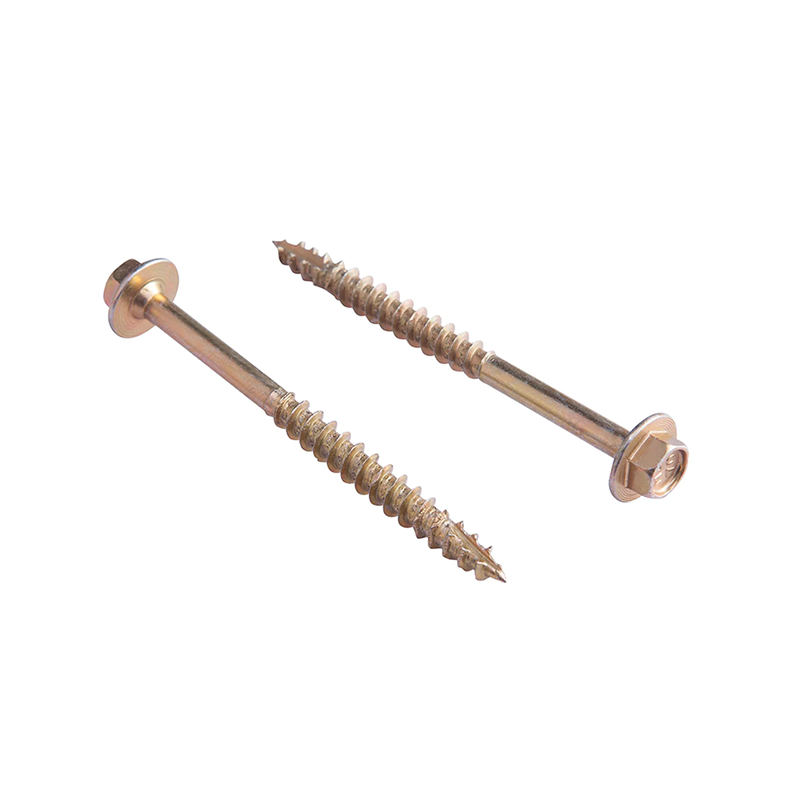
- Hex washer head: broad flange, high torque capacity, first choice for steel framing and roofing.
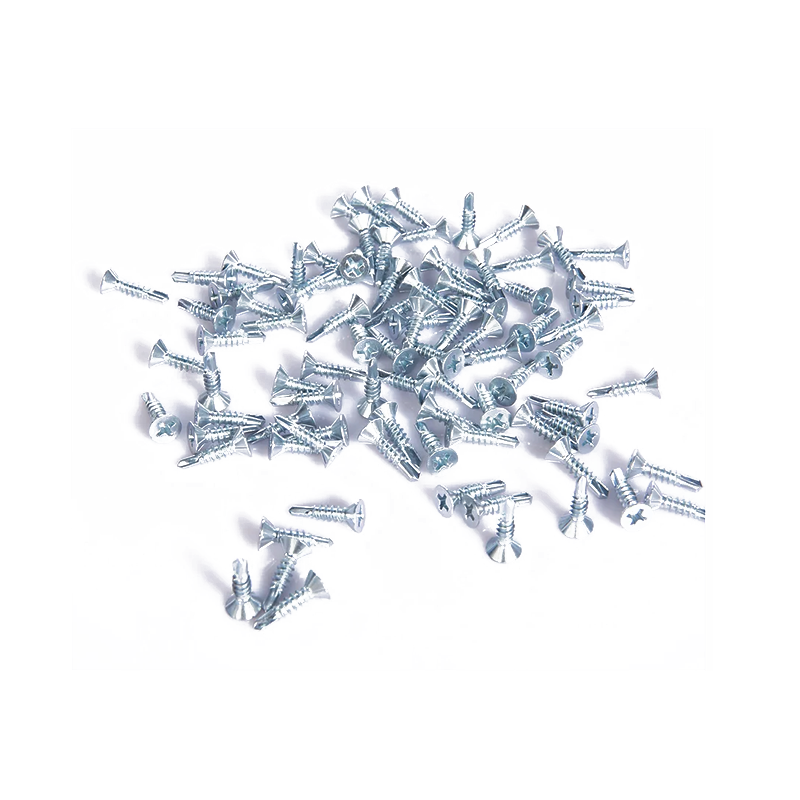
- Flat countersunk head: sits flush with the surface, useful for trim, covers, and visible panels.
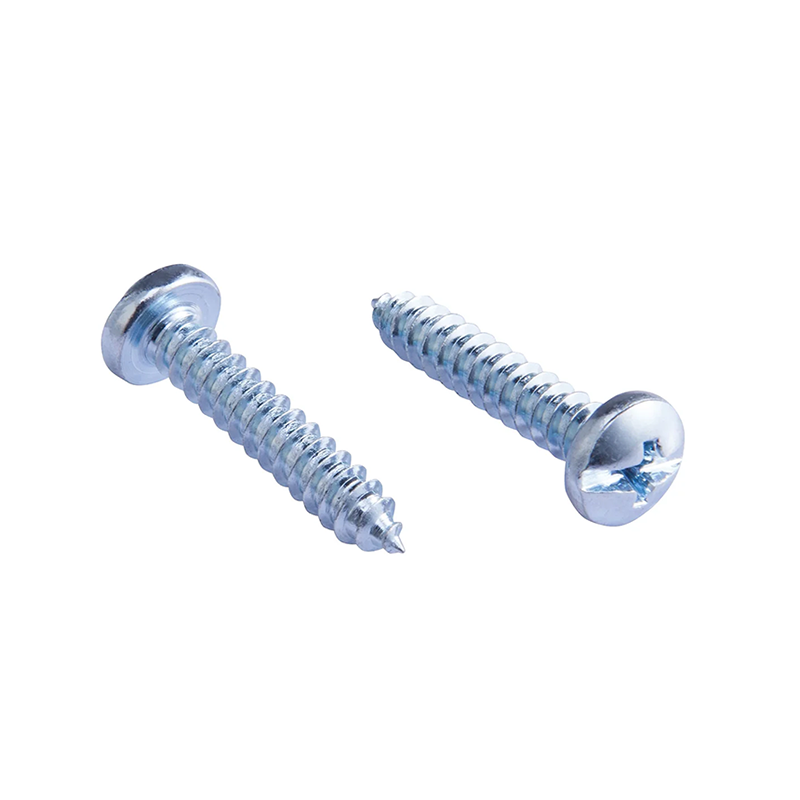
- Pan head: low-profile, general-purpose fastening.
- Modified truss and pan framing heads: wider bearing area for thin materials.
- Phillips bugle head: countersunk shape combined with a self-drilling point for attaching components to steel.
For metal framing and structural connections, the hex washer head version is widely specified because its flange prevents pull-through and distributes the clamping force. Cili Machinery offers that configuration with a hardened drill point, and it is suitable for medium to heavy sheet steel.
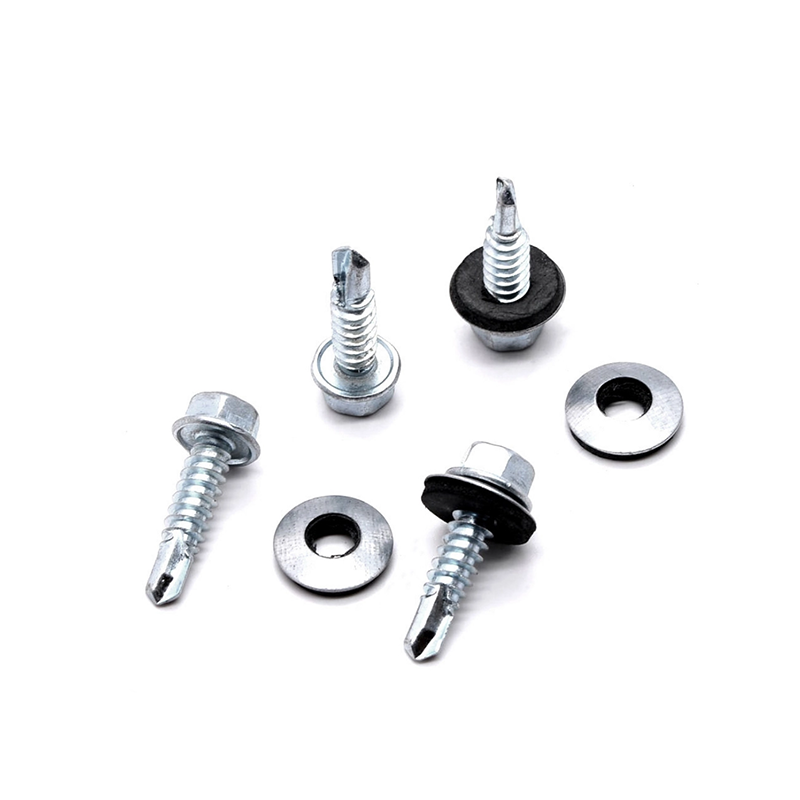 Hex Washer Head Self-Drilling Screw for Metal FramingThis screw's hex washer head prevents pull-through and distributes clamping force in structural connections. Its hardened drill point suits medium to heavy sheet steel, and the drill point size must match the material thickness.View Product →
Point Classes and Material Thickness
The drill point is described by a size number, not by the screw diameter. This number indicates the thickness range the point can penetrate.
| Point class | Typical material thickness | Common use |
|---|---|---|
| #1 | Very thin sheet metal, aluminum | Light cladding, thin sheet assemblies |
| #2 | Thin to medium sheet steel | Metal framing, steel-to-steel connections |
| #3 | Medium structural steel | Roofing, purlins, sandwich panels |
| #4 / #5 | Heavy structural sections | Long fasteners in thick steel |
Selecting a point large enough for the total material stack is critical. If the point stalls before the threads engage, the screw may work-harden the steel and become impossible to drive. If the point is too aggressive for a thin sheet, it can tear the material.
Coatings and Corrosion Protection
Self-drilling screws are installed in environments where leaks and corrosion are immediate concerns. Coatings should be selected based on exposure, not just appearance.
- Clear or blue zinc: indoor use, light humidity, low cost.
- Yellow zinc: better corrosion resistance, moderate outdoor exposure.
- Hot-dip galvanized or mechanical zinc: exterior fastening, but the heavier coating can affect thread fit.
- Stainless steel: marine, chemical, and high-moisture environments.
- Polymer or organic topcoat with sealing washer: metal roofing, sandwich panels, and visible exterior work.
Sandwich panels are a special case because the screw passes through metal, insulation, and an inner liner. A sandwich panel screw with an EPDM bonded washer is engineered to seal at the head and drill cleanly through several different materials.
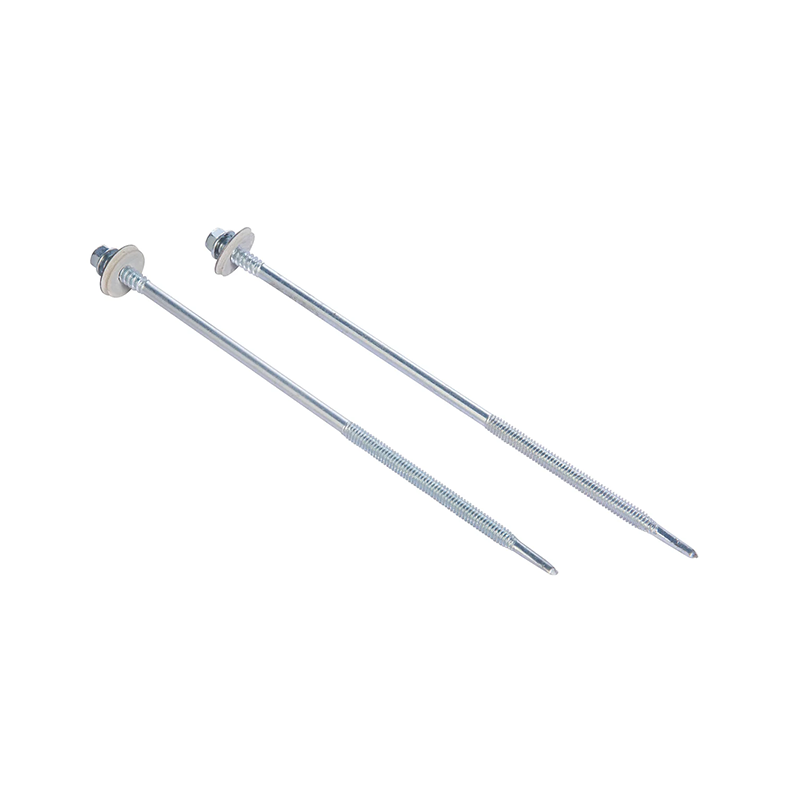 Sandwich Panel Screw with EPDM Bonded WasherDesigned for sandwich panels, this screw drills through metal, insulation, and inner liner while the EPDM washer seals at the head. It addresses multi-layer fastening where a standard self-drilling screw may not seal effectively.View Product →
How to Choose the Right Self-Drilling Screw
Before ordering, work through these steps:
- Measure the total thickness of the materials you are clamping.
- Select a point class that can drill at least that total thickness.
- Choose a head style that gives enough bearing area for the base material.
- Check the screw length: it must clear the material stack and leave enough thread engagement.
- Match the coating to humidity, temperature, and chemical exposure.
- Use the correct drive type and install with a constant-speed driver, not a hammer drill.
If the screw head must sit flush, a flat-head self-drilling screw is the right geometry. The countersunk angle should match the hole detail in the top panel.
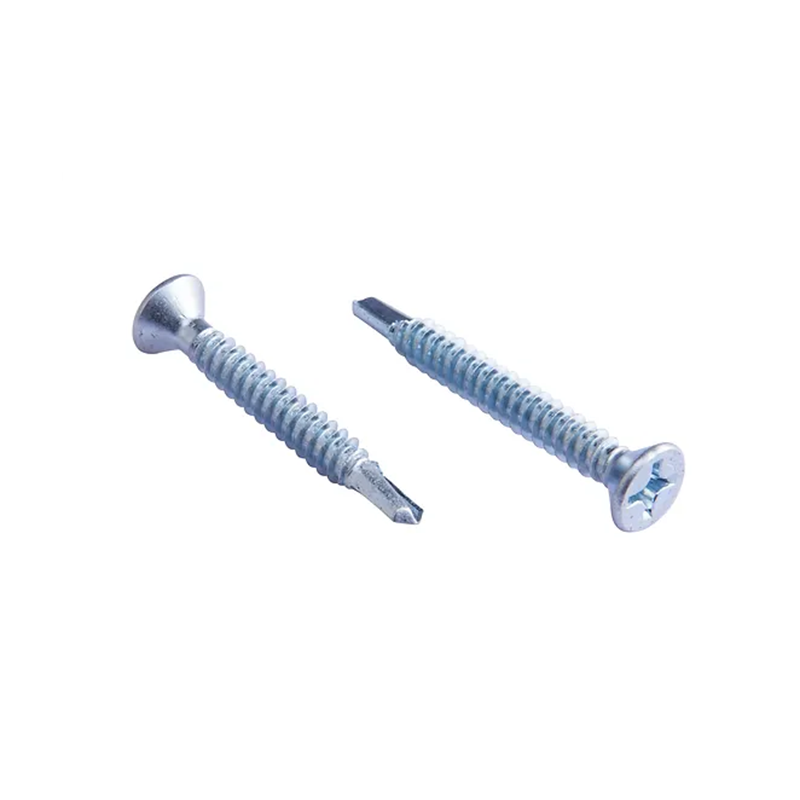 Flat Head Self-Drilling Screw for Flush Countersunk InstallationsThis flat-head screw sits flush with the surface, ideal for paneling, flooring, and cabinetry. It self-drills without pre-drilling, and sourcing from a supplier with in-house cold heading and heat treatment ensures consistent point performance.View Product →
What to Look For in a Supplier
Sourcing self-drilling screws is different from sourcing standard bolts because the point performance is invisible until installation. A supplier that controls cold heading, heat treatment, and surface finishing under one roof can provide more consistent points and faster feedback when you request a custom batch.
Cili Machinery, for example, operates a 15,000-square-meter plant with wire drawing, annealing, cold heading, and thread rolling, and currently produces about 1,000 metric tons of fasteners per month. The company holds ISO9001-2008 certification and can manufacture from customer samples or drawings. For a critical connection, those process controls matter.
Before finalizing a specification, review the hex washer head self-drilling screw design advantages and compare them with your installation conditions. The right screw saves labor, avoids callbacks, and keeps the connection tight for its service life.
 Get In Touch
From concept to production, we cah create the products you want.
 Products
- · SCREWS
- · HEXAGONAL NUTS
- · THREADED BOLTS
- · EXPANSION ANCHORS & PLUGS
- · WIRE SCREW HOOKS
- · SCREW WASHERS
Contact Information Tel: 86-574-62101087
 E-mail: [email protected]
- E-mail: [email protected]
 Add: Xiaocao 'e Binhai Industrial Park, Yuyao, Zhejiang, China
Copyright 2024 Yuyao Cili Machinery Co., Ltd. All Rights Reserved.
 Custom Drilling Screws Manufacturers
Custom Drilling Screws Manufacturers