

 English
 русский
Roofing Screws: Types, Coatings, and Installation Tips for Leak-Free Roofs
 2026.09.14
 Industry news
A roofing contractor replacing a failed ridge cover pulls out a line of screws to check why the timber underneath is wet. Every fastener tells a similar story: the EPDM washer had been crushed unevenly, the drilled hole was slightly oversized, and the exposed thread had carried moisture straight into the deck. The panel was in good condition; the screw was the point of failure.
Roofing screws are the smallest engineered component in a roof assembly, yet they decide how long the building stays watertight. This guide explains what separates a dependable roofing screw from an ordinary self-tapper, and how to specify one that will not become the leak path.
What Makes a Roofing Screw Different from an Ordinary Self-Tapper
A roofing screw has one job beyond making a connection: it has to close the hole it creates. Ordinary self-tapping screws form threads and clamp parts together, but without a sealing washer they leave an open channel for water. Roofing screws integrate three features that common fasteners rarely combine: a hardened point that cuts into steel or timber without pre-drilling, a thread geometry matched to the substrate, and a bonded EPDM washer that compresses against the panel to seal the opening.
When all three are designed as one product, the fastener can be driven quickly on a roof and remain watertight for decades. When they are not, a roof leak is only a matter of time. The practical differences to look for:
- Self-drilling points eliminate separate drill bits and keep installation fast on both steel and timber substrates.
- Bonded EPDM washers resist UV, ozone and temperature swings from about -40°C to +120°C without losing elasticity.
- Hex washer heads transmit higher torque, so the screw seats correctly without stripping the roof sheet.
- Corrosion protection, from zinc passivation to organic topcoats, sets the real service life of the fastener.
Anatomy of a Roofing Screw: What Actually Matters
Every element of a roofing screw carries a specific duty, and buying on price alone usually hides a weakness in one of these three areas.
Head and Drive
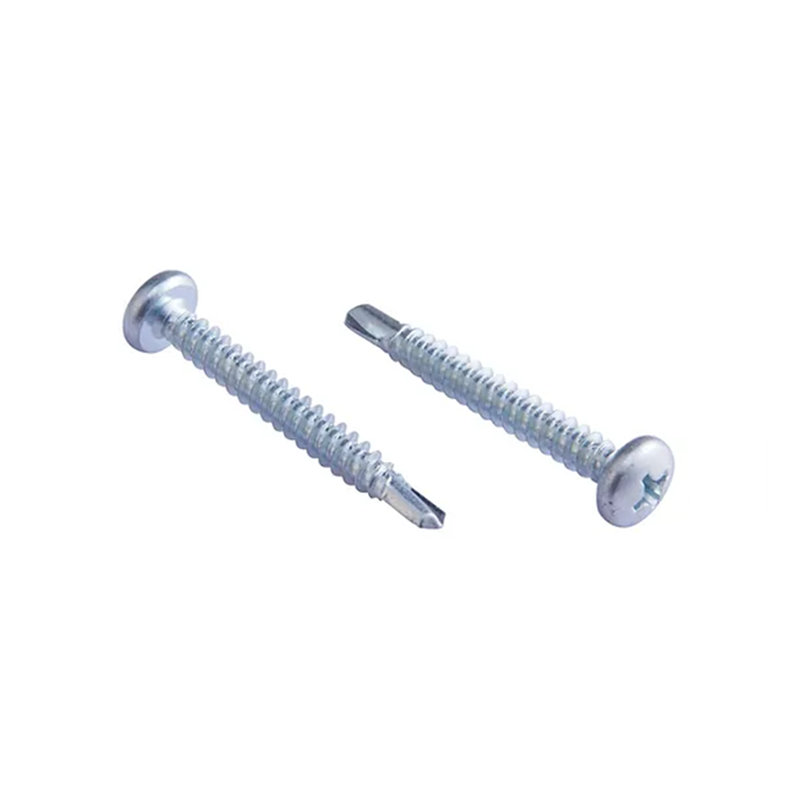
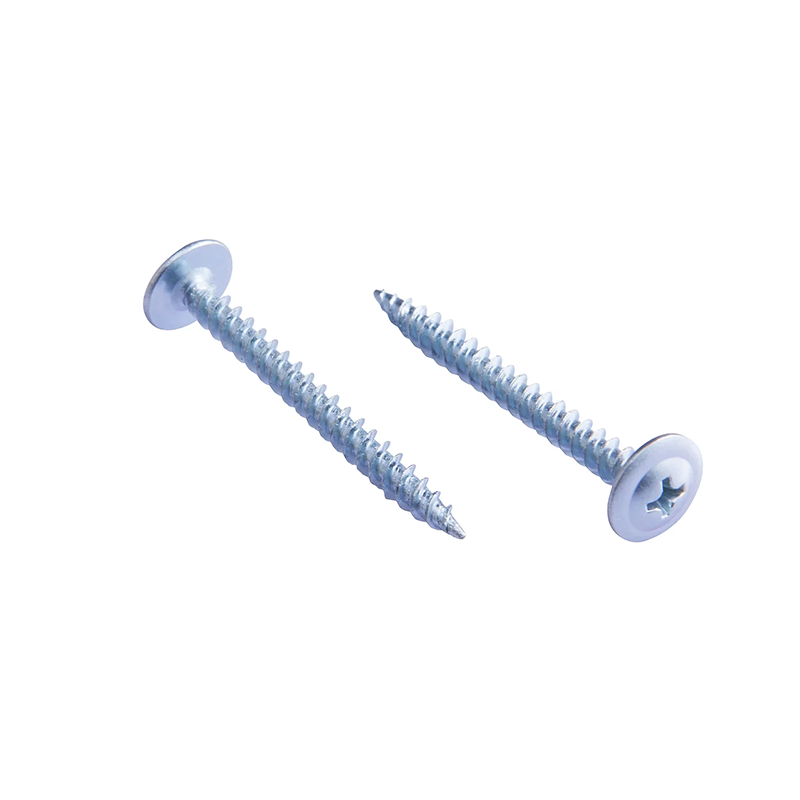
Hex washer heads are the default for exterior roofing because they cope with the high torque needed to drive through steel. Low-profile pancake heads are used where a clip or profile leaves little clearance. In both cases, a sharp, well-formed drive recess prevents the driver from cam-out when you are working at the edge of a roof.
Sealing Washer
The washer is the part that makes a roofing screw weathertight. A vulcanized EPDM washer bonded to the backing steel stays in place and remains elastic under UV and temperature change. A glued or poorly cured washer separates after months of expansion and contraction, and the screw becomes a leak point.
Drill Point and Thread
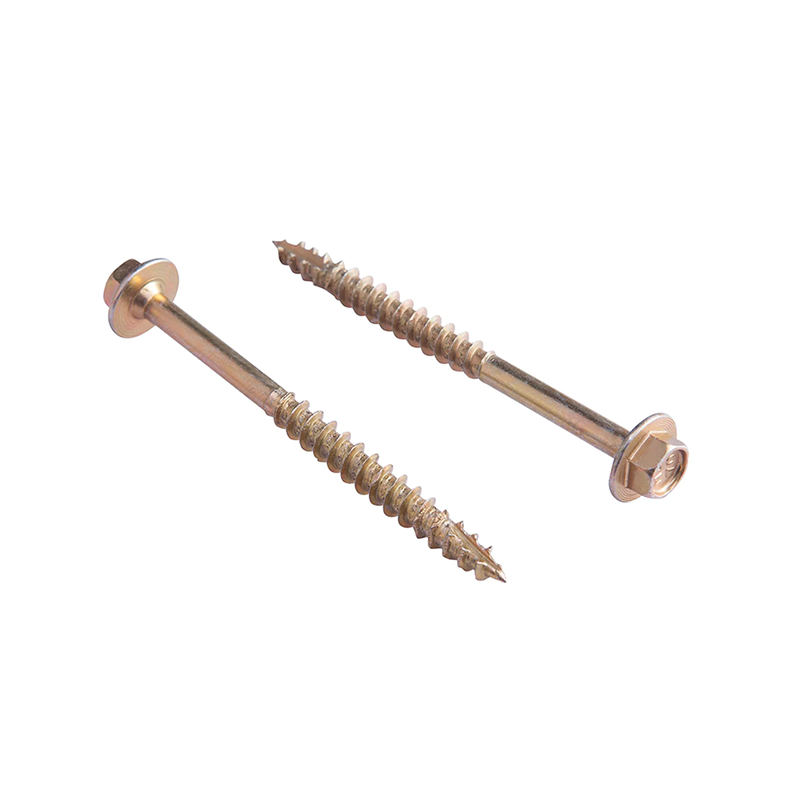
The drill point must extend far enough to clear the panel and the substrate section before the threads begin to bite. As a rule, a #2 point suits steel up to about 2 mm combined thickness, while a #3 point handles heavier framing; on timber, a type 17 sharp point starts easily and pulls the screw in without pre-drilling. Coarse threads give maximum grip in wood, while high-low threads hold thin steel without cracking it.
Roofing Screw Types at a Glance
The first question in any specification is what sits underneath the panel: steel or timber. That answer fixes the point type and thread geometry, while the washer and coating then match the exposure.
| Screw type | Substrate | Typical applications | First detail to verify |
|---|---|---|---|
| Metal-to-metal self-drilling | Steel purlin or steel deck | Trapezoidal and standing seam panels | Drill point length against panel plus purlin thickness |
| Metal-to-wood self-tapping | Timber battens, OSB or plywood | Corrugated sheets fixed over timber frames | Type 17 point and thread length engaged in wood |
| Sealed with bonded EPDM washer | Steel or timber | Exterior weather-exposed fixing where leaks are critical | Washer adhesion and coating integrity around the hole |
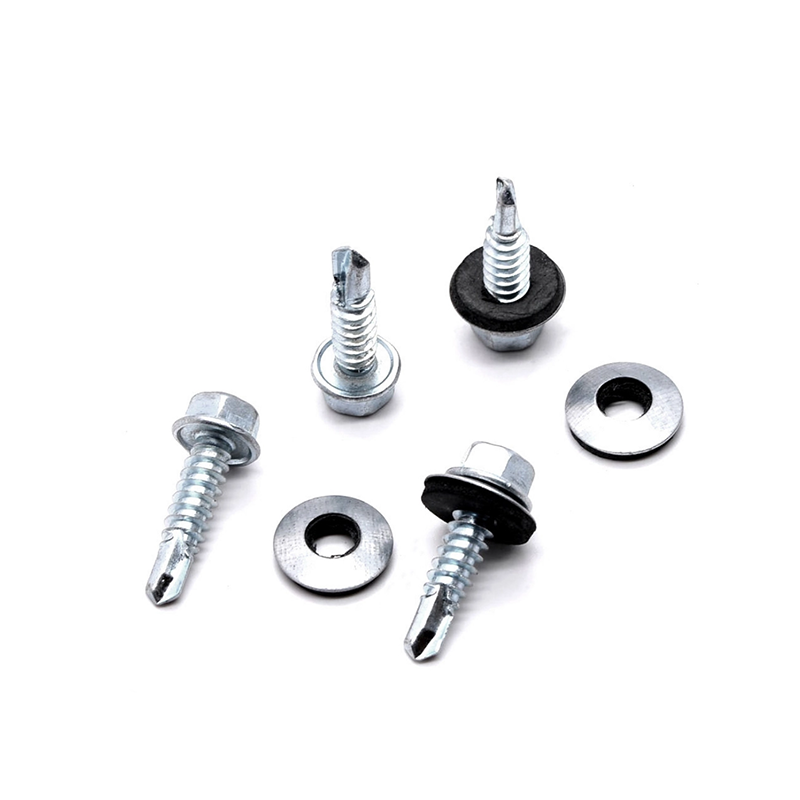
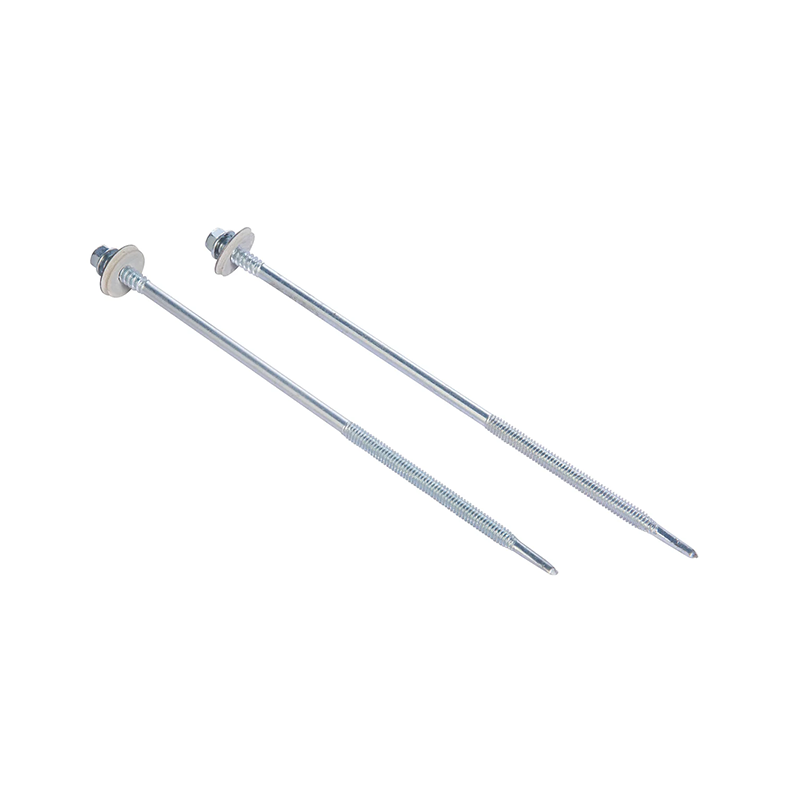
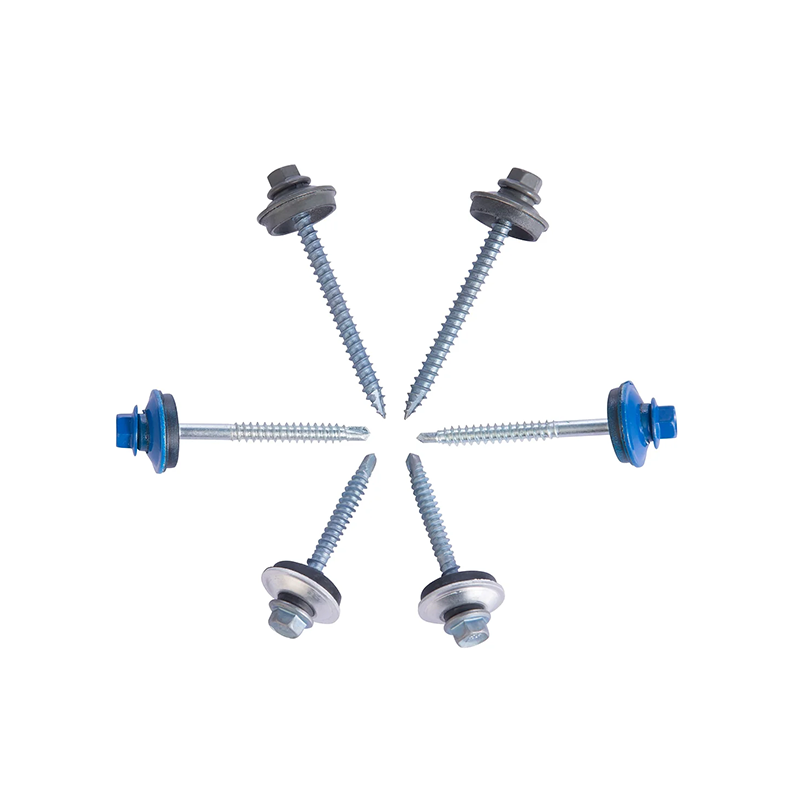 Roofing Screw with Bonded Sealing WasherThis self-drilling roofing screw with bonded sealing washer provides waterproof fixing for metal sheets, tiles, and membranes. Suitable for exposed profiles in residential, commercial, and industrial projects.View Product →
For exposed profiles, a roofing screw with a bonded sealing washer is the standard answer.
This version is manufactured in-house from wire drawing to final assembly: carbon steel with controlled hardness, zinc-plated, then fitted with a vulcanized EPDM washer, so the seal and the screw arrive as a single unit.
How to Select the Right Roofing Screw
Start from the substrate and the exposure, and the screw model follows. Selecting by diameter alone is a guess that often ends in rework.
- Penetration: for timber, allow at least 25 mm of thread in the batten; for steel, the screw must pass completely through the section with fully engaged threads beyond the panel.
- Drill point: add the thickness of the panel and the substrate, then choose a point that clears both. A point that is too short burns out in heavy purlins.
- Washer quality: the EPDM washer must be pre-assembled and firmly bonded; a loose washer means a skipped process step somewhere in production.
- Coating: zinc-plated carbon steel suits inland and sheltered roofs; stainless steel or an organic topcoat is the safer call for coastal and industrial sites where chlorides and pollution attack exposed fasteners.
- Drive style: hex washer heads suit outdoor work because the driver engages reliably even at an angle.
Confirm these five points against the fastener data sheet before ordering. On a roof with thousands of screws, a small error in point length or coating multiplies into a large repair bill.
Installation Practices That Make a Fastener Last
Installation quality decides fastener life more than most buyers expect. A well-made screw installed poorly leaks faster than a simple screw installed cleanly.
- Drive the screw perpendicular to the panel surface; an angled screw distorts the washer and leaves an uneven seal.
- Set the clutch so the washer begins to bulge evenly around the hole but is not crushed flat. The visible ring of rubber indicates the seal is under the correct compression.
- Keep the drill speed moderate. High rpm generates heat that softens the EPDM and dulls the point in thick steel.
- Respect the recommended fastener spacing and edge distance for the panel profile. Too few screws overload the remaining ones, and screws placed too close to the corrugation edge tear out under wind lift.
- For sandwich panels, confirm the thread length reaches the structural inner sheet without crushing the insulation around the hole.
A yearly walk-over that checks for loose washers, rust streaks and raised screw heads catches problems before they reach the deck. The same attention to the screw-to-material interface runs through our industry notes on screw performance, where we discuss how thread and point geometry affect holding strength in practice.
Procurement Mistakes That Appear Later
The failures that show up two years after installation usually began at the purchasing desk. A fastener that fails in service costs many times its purchase price once repair time, downtime and sheet replacement are counted.
- Minimum coating thickness: a very thin zinc passivation is the first thing to rust in marine or industrial air. If the final use is coastal, specify stainless steel or a tested organic coating.
- Washer bond: washers that detach during transport are a red flag for poor vulcanization. Once separated, the washer cannot be reseated on site with the same seal.
- Hardness consistency: screws with uneven hardness either break at the point when they meet a thick purlin, or strip their own threads in thin steel. Batch consistency is fixed by process control, not by the buyer.
- Dimensional control: an off-size hex head slips in the driver, rounding corners and slowing installation. Tolerances matter most when you are driving thousands of fasteners on one roof.
Buying from a manufacturer that controls the entire chain from wire drawing and annealing through cold heading, thread rolling and washer assembly reduces these risks. It also makes it practical to adjust thread length, point form or coating for a specific roof profile without changing suppliers. A factory working under an ISO 9001 quality system with its own production lines is easier to hold accountable than a trading desk with no view of the process.
The roofing screw is the small interface between the roof and the structure that holds it. Match the drill point to the material, the washer to the exposure, and the torque to the washer, and the fastener stops being the weak link in the assembly.
For projects that need custom lengths, special coatings or a defined point geometry, start from the company's manufacturing capabilities overview and confirm the screw specification against the production line before you order.

 Get In Touch
From concept to production, we cah create the products you want.
 Products
- · SCREWS
- · HEXAGONAL NUTS
- · THREADED BOLTS
- · EXPANSION ANCHORS & PLUGS
- · WIRE SCREW HOOKS
- · SCREW WASHERS
Contact Information Tel: 86-574-62101087
 E-mail: [email protected]
- E-mail: [email protected]
 Add: Xiaocao 'e Binhai Industrial Park, Yuyao, Zhejiang, China
Copyright 2024 Yuyao Cili Machinery Co., Ltd. All Rights Reserved.
 Custom Drilling Screws Manufacturers
Custom Drilling Screws Manufacturers