

 English
 русский
Wire Screw Hooks: A Complete Guide to Sizes, Uses & Installation
 2026.07.06
 Industry news
The right wire screw hook is chosen by matching its wire gauge and screw length to the weight it will hold and the material it will be driven into. For light-duty use such as hanging mugs or string lights, a small hook with a #6-#8 screw gauge is sufficient. For heavier loads like tools, planters, or extension cords, a #10-#14 gauge hook driven at least 1 inch into solid wood is recommended. Always drive into a stud, joist, or solid wood — drywall alone cannot support a screw hook safely.
The sections below cover how to read screw hook sizing, match a hook to its intended load, choose the right material and finish, and install one correctly without splitting wood or stripping the thread.
What a Wire Screw Hook Is and How It's Sized
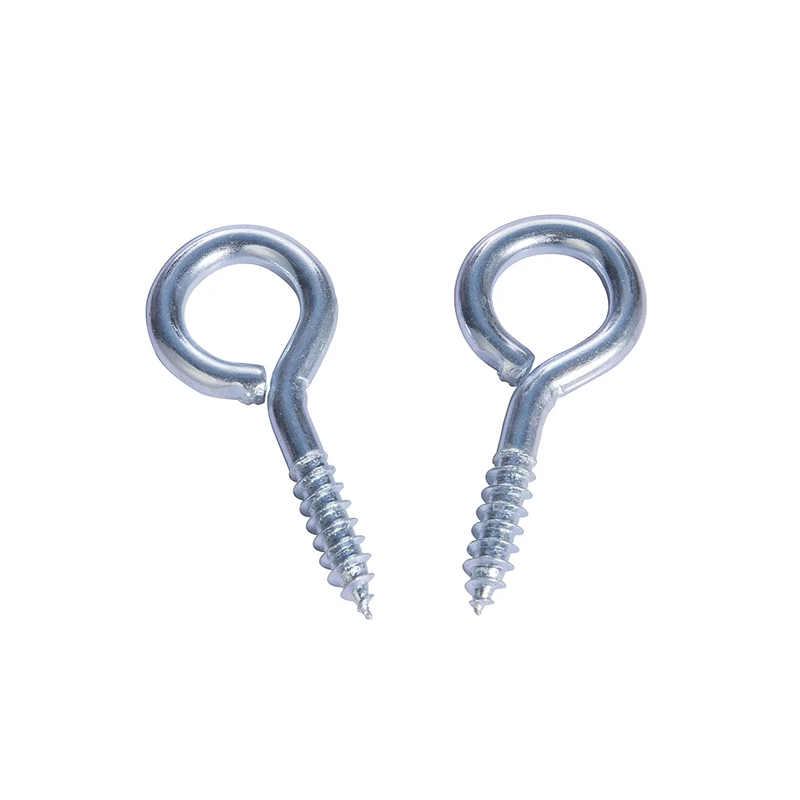
A wire screw hook is a single piece of bent wire with a pointed screw thread on one end and an open or closed hook shape on the other. Unlike a separate screw-and-hook assembly, it's driven directly into the material by twisting, which makes it fast to install but limits how much torque it can take before bending.
Sizing is defined by three measurements:
- Wire gauge: the thickness of the wire, expressed as a screw number (e.g. #6, #10, #14) — the higher the number, the thicker and stronger the wire.
- Overall length: measured from the tip of the screw point to the top of the hook, typically ranging from 1 inch to 6 inches.
- Thread length: the portion that actually screws into the material — this should be at least 1 inch in solid wood for any load-bearing use.
A label reading "2-1/2" x #10" means a 2.5-inch overall length hook made from #10 gauge wire — common for mid-weight household hanging.
Match the Hook Size to the Load
Wire screw hooks are not rated with the same precision as load-bearing hardware, but manufacturers generally follow a consistent pattern: thicker wire and longer thread depth support more weight. As a safety margin, select a hook rated for at least twice the actual item weight, since wire hooks bend under sustained or shock loads well before they reach their stated limit.
| Wire Gauge | Typical Length | Approx. Load Capacity | Common Use |
|---|---|---|---|
| #6 | 1"-1.5" | Up to 5 lbs | Mugs, keys, string lights |
| #8 | 2"-2.5" | 5-15 lbs | Small plants, picture frames |
| #10 | 2.5"-3" | 15-30 lbs | Bikes, extension cords, tools |
| #12 | 3"-4" | 30-50 lbs | Ladders, hammocks (single point) |
| #14 | 4"-6" | 50+ lbs | Porch swings, heavy chains |
For load-bearing applications like swings or hammocks, use two hooks spreading the weight rather than relying on a single point, and confirm the anchor point is solid framing, not just sheathing or trim.
Common Material and Finish Options
Zinc-Plated Steel
The most common and least expensive option, suitable for indoor, dry environments. Zinc plating offers only light corrosion resistance and will rust if used outdoors or in humid spaces like garages near washing machines.
Stainless Steel
Resists rust and corrosion, making it the standard choice for outdoor use, marine environments, or anywhere exposed to moisture — patio hooks, garden trellises, or boat storage.
Brass
Chosen mainly for appearance in visible indoor settings, such as hanging mugs in a kitchen or coats in an entryway. Brass is softer than steel, so it's better suited to light loads under roughly 10 lbs.
Vinyl or Plastic-Coated
A thin coating over steel that protects against scratching delicate items hung on the hook, like jewelry or fabric, and adds minor corrosion resistance.
How to Install a Wire Screw Hook Correctly
- Locate solid material. Use a stud finder for walls, or confirm you're driving into solid lumber for joists, beams, or fence posts — never into drywall or thin paneling alone.
- Pre-drill a pilot hole. Drill a hole about 70% of the screw's diameter and slightly shorter than the thread length. This step is essential in hardwood and recommended in softwood to prevent splitting.
- Start the hook by hand. Insert the tip into the pilot hole and turn clockwise using a screwdriver shaft through the hook's eye, or pliers gripping the hook itself, for leverage.
- Drive until snug, not over-tightened. Stop once the hook is firm and properly oriented — continuing to force it can strip the wood thread or bend the wire.
- Test before loading fully. Apply gentle pressure in the direction of the intended load to confirm the hook doesn't shift or loosen before hanging the actual item.
Skipping the pilot hole is the most common installation mistake — it's the leading cause of split wood and stripped holes, especially with hooks #10 gauge or thicker.
Quick Reference Checklist
- Confirm the anchor point is solid wood, a stud, or a joist — not hollow drywall.
- Choose a wire gauge rated for at least double the actual load weight.
- Match the finish to the environment: stainless or coated for outdoor/humid areas, zinc for dry indoor use.
- Pre-drill a pilot hole before driving any hook #10 gauge or larger.
- Test the hook under light pressure before committing to the full load.
 Get In Touch
From concept to production, we cah create the products you want.
 Products
- · SCREWS
- · HEXAGONAL NUTS
- · THREADED BOLTS
- · EXPANSION ANCHORS & PLUGS
- · WIRE SCREW HOOKS
- · SCREW WASHERS
Contact Information Tel: 86-574-62101087
 E-mail: [email protected]
- E-mail: [email protected]
 Add: Xiaocao 'e Binhai Industrial Park, Yuyao, Zhejiang, China
Copyright 2024 Yuyao Cili Machinery Co., Ltd. All Rights Reserved.
 Custom Drilling Screws Manufacturers
Custom Drilling Screws Manufacturers