

 English
 русский
Roofing Screws: How to Choose the Best Roofing Fasteners for Your Project
 2026.09.28
 Industry news
Roofing screws are small components that carry a surprisingly heavy responsibility. They hold metal roofing panels in place, resist high wind loads and keep water out of the building envelope. A single defective screw can cause a leak, corrode the surrounding panel or loosen the entire roof section. That is why contractors and metal building suppliers pay close attention to fastener quality. Choosing the right roofing screws is not simply a matter of length and quantity; it is a decision that affects the safety, durability and maintenance cost of the whole roof.
Whether you are installing new metal roofing, replacing old fasteners, or planning a maintenance visit, understanding how roofing screws work can help you make a better purchase decision. In this guide, we cover the main types, materials, coatings, installation practices and the key signs of a well-made roofing screw.
What Makes Roofing Screws Different?
Many people assume that any self-tapping screw can be used on a roof. In reality, roofing screws are designed for the unique demands of metal panels: sharp breakdown of drill point, proper thread spacing, hardened steel core and a pre-assembled sealing washer. The washer is usually made of EPDM (ethylene propylene diene monomer), which remains flexible in a wide temperature range and forms a watertight ring around the screw.
Compared with ordinary wood screws, roofing screws often have a larger head, a washer integrated under the head, and a drill tip capable of cutting through steel or aluminium sheets. This reduces installation time, eliminates the need for a pilot hole and lowers the risk of stripping. It also allows the screw to create a clean hole without cracking or deforming the metal panel.
We manufacture these fasteners in a range of sizes, with or without coloured heads, to suit common roof profiles.
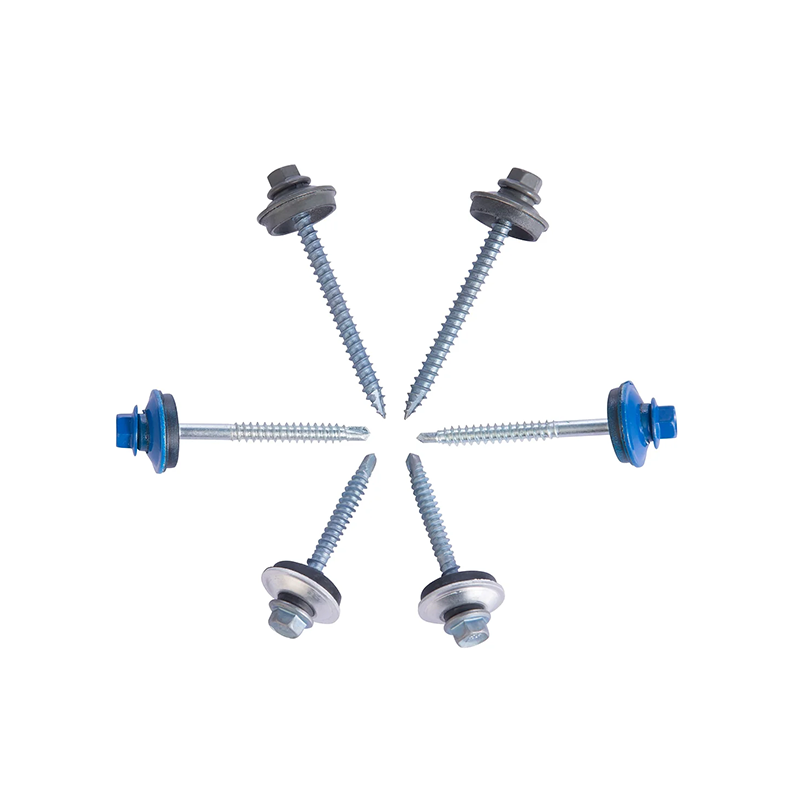 Color-Matched Roofing Screws with EPDM Sealing WashersThese self-drilling fasteners combine a hex washer head with bonded EPDM washers to seal roof holes effectively. Available in multiple sizes and head colors, they suit metal panels, tiles, and membranes for residential, commercial, and industrial roofing projects.View Product →
Self-Drilling vs. Self-Tapping Roofing Screws
There are two main families of fasteners used in roofing: self-drilling screws and self-tapping screws. Self-drilling screws have a drill point that directly cuts a hole in the base material. This is the most common type for attaching metal roof panels to steel purlins. Self-tapping screws, by contrast, need a pre-drilled pilot hole in most materials, although they can tap their own thread once the hole exists. For metal-on-metal roof assembly, self-drilling screws are usually the first choice because they save a full operating step and create a consistent hole size.
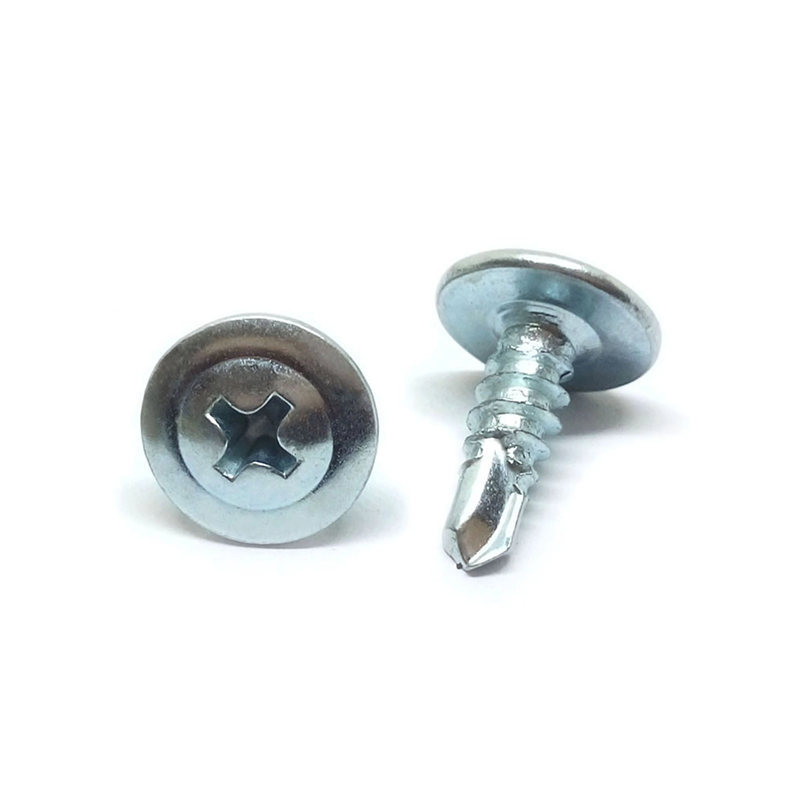
The head style also matters. A hex washer head provides good torque transfer, while a pancake or low-profile head gives a flatter roof surface. Some screws feature a Phillips drive, but hex drives are preferred when high driving torque is needed. If you are working with a compact drill or a power tool with depth adjustment, the hex washer head design helps maintain control.
To understand why this geometry performs well under tension, you can read our detailed explanation of hex washer head self-drilling screw design advantages.
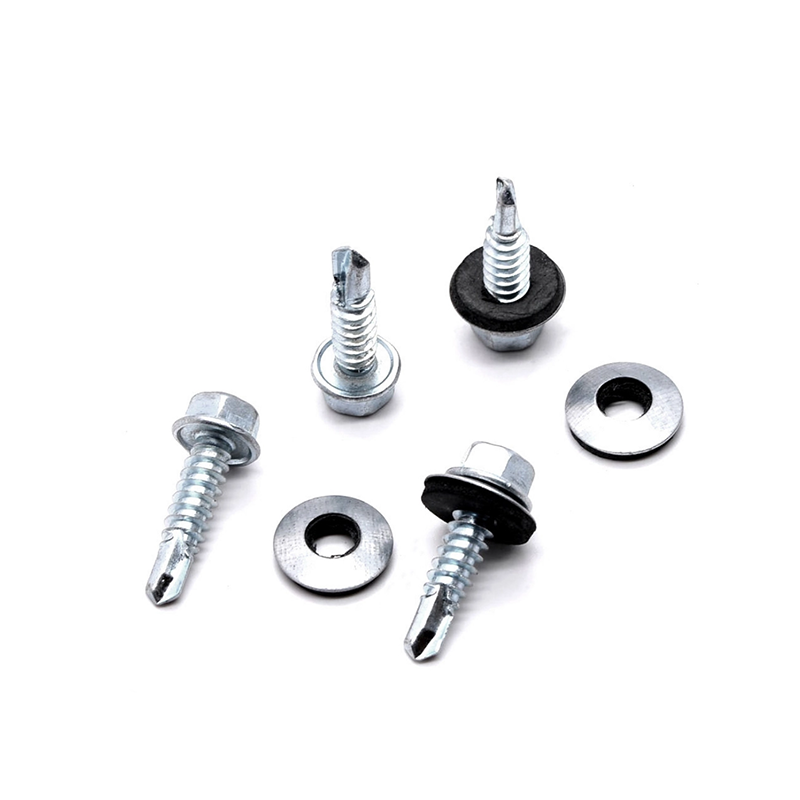 Hex Washer Head Self-Drilling Screw for Metal FasteningThis screw features an integrated drill tip and hex washer head, allowing direct penetration into steel, wood, or plastic without pre-drilling. Its design improves load distribution and pullout resistance, making it a practical choice for metal-on-metal roof assemblies.View Product →
Materials and Coatings for Long-Term Performance
Roofing screws are manufactured from different grades of carbon steel, stainless steel or aluminium. For most metal roofs, carbon steel with protective coatings offers the best balance of strength and price. Stainless steel becomes necessary in coastal areas or chemical environments where chloride exposure is high.
Coatings play a critical role. Zinc plating is common for indoor or low-exposure projects. Hot-dip galvanizing provides a thicker layer of zinc and is better for wet or outdoor environments. Some premium screws use multiple layers or a powder coating to match the roof panel colour and add extra weather resistance. The right coating should be selected according to the expected exposure and service life.
| Material / Coating | Key Strength | Typical Use |
|---|---|---|
| Zinc-plated carbon steel | Cost-effective, moderate corrosion protection | Dry or low-humidity environments |
| Hot-dip galvanized | Thick zinc layer, good edge protection | Outdoor metal roofing and purlins |
| Stainless steel | Highest corrosion resistance | Coastal, chemical or high-moisture sites |
| Carbon steel with EPDM washer | Sealing plus corrosion resistance | Metal roofs requiring watertight fastening |
Regardless of coating, the sealing washer must be considered. A quality EPDM washer remains elastic, does not crack under UV light and compresses evenly to fill the hole. We supply bonded washers in various diameters and colours, so the fastener can match the aesthetics of the roof while preserving the seal.
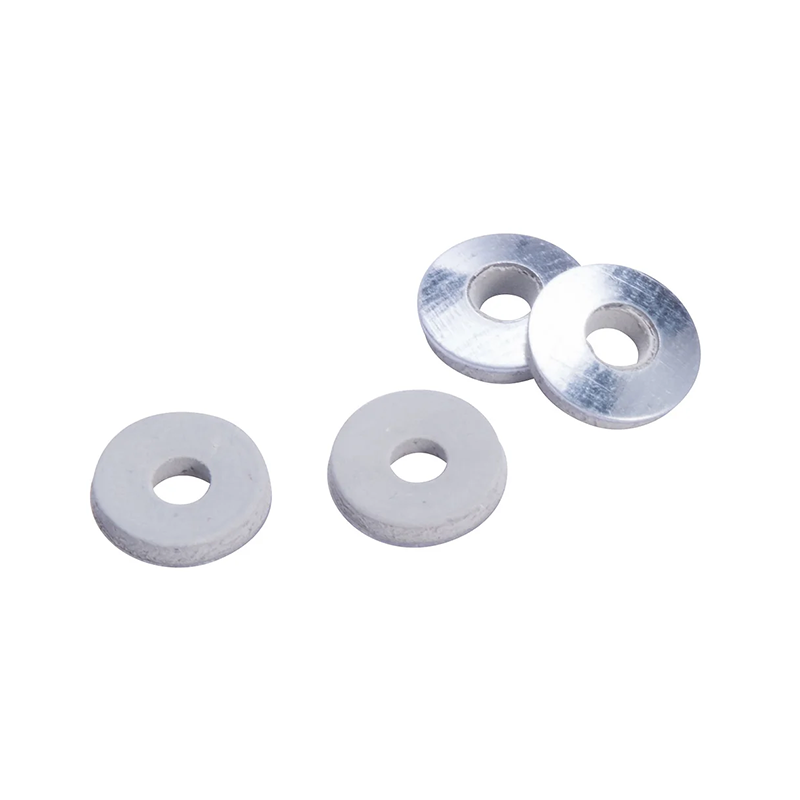 EPDM Bonded Washer for Weatherproof Roof SealingThis sealing gasket pairs EPDM rubber with a metal backing plate, providing durable, UV-resistant compression around fastener holes. It helps maintain waterproof integrity in roof and wall installations, including solar panels and ventilation systems, while offering color options to match roofing aesthetics.View Product →
How to Choose the Right Roofing Screw
Selecting the correct roofing screw depends on several variables: the type of metal panel, the thickness of the substrate, required pull-out force, and the level of environmental exposure. The screw must be long enough to penetrate the upper panel and the supporting member, usually with one or two threads protruding on the other side. If the roof panel is attached to wood purlins, a sharp-pointed screw with appropriate thread spacing may be sufficient. If it is attached to steel, a self-drilling point is essential.
- Match the drill point to the material thickness: for 0.5 to 1.0 mm steel, a normal drill point is enough; for thicker steel, choose a longer drill point.
- Choose a head that suits the roof profile: use hex washer head for strong bearing and pancake head for a flush finish.
- If the project is exposed to salt air, use stainless steel or a premium coated fastener.
- Check the washer material: EPDM or similar rubber will provide a reliable waterproof seal.
- Confirm the length: a good rule of thumb is to use a screw that extends at least 5 to 10 mm beyond the underside of the material.
When in doubt, contact your fastener supplier with details about the roof panel and purlin. A reputable manufacturer can recommend the right diameter, length and coating instead of guessing.
Best Practices for Installing Roofing Screws
Even a high-quality roofing screw will perform poorly if installed incorrectly. Use a drive bit that matches the screw head, and set the clutch or torque limiter to avoid overdriving. The EPDM washer should be compressed until it visibly forms a ring around the screw, but it should not be squeezed black or flattened. Over-tightening is one of the most common installation errors.
Apply a steady, moderate speed while driving the screw. Excessive speed can heat the tip and wear the washer, while too low a speed may cause the drill point to wander. Position the screw perpendicular to the roof surface, and maintain consistent spacing along the panel ribs. If you need to replace a fastener, choose the same length and type, not an ordinary sheet metal screw.
- Clean the area around the fastener hole.
- Align the screw point on the rib of the roof panel.
- Drive at low speed until the drill tip engages the metal.
- Increase speed to cut through the material.
- Stop when the washer just begins to bulge around the edge.
Why a Reliable Fastener Manufacturer Matters
Roofing screws are not a commodity product. The difference between a cheap imitation and a well-designed screw becomes clear after a few seasons of rain, wind and thermal cycles. A reliable manufacturer controls the whole production chain, from wire drawing and annealing to cold heading and thread rolling. They also verify hardness, thread geometry and washer adhesion before packaging.
Our company, Yuyao Cili Machinery, specialises in self-drilling screws, self-tapping screws and roofing fasteners. Our 15,000-square-meter facility houses the complete process line, and our team with more than 200 employees produces roughly 1,000 tons of fasteners every month. We hold ISO9001-2008 certification and apply strict quality control at each station. Most importantly, we can customise screws according to your drawings or samples, including different lengths, head styles and washer colours.
From the coastal industrial area of Hangzhou Bay, we export to clients in many regions. Whether you need standard roofing screws with sealing washers or custom fasteners for a specific roof system, our engineering team can support you from design to delivery.
Conclusion
Roofing screws may be small, but they are the unsung heroes of a metal roof. By understanding the difference between self-drilling and self-tapping screws, the role of coating materials, and the importance of correct installation, you can significantly reduce leaks and maintenance costs. When buying roofing screws, always check the quality of the steel, the washer and the finishing. A reliable manufacturer will help you choose the right product and ensure that your fasteners perform for decades.
If you are planning a roofing project and need a trusted partner, our team is ready to provide a solution that fits your requirements.
 Get In Touch
From concept to production, we cah create the products you want.
 Products
- · SCREWS
- · HEXAGONAL NUTS
- · THREADED BOLTS
- · EXPANSION ANCHORS & PLUGS
- · WIRE SCREW HOOKS
- · SCREW WASHERS
Contact Information Tel: 86-574-62101087
 E-mail: [email protected]
- E-mail: [email protected]
 Add: Xiaocao 'e Binhai Industrial Park, Yuyao, Zhejiang, China
Copyright 2024 Yuyao Cili Machinery Co., Ltd. All Rights Reserved.
 Custom Drilling Screws Manufacturers
Custom Drilling Screws Manufacturers