

 English
 русский
What Are the Different Types of Hexagonal Nuts and Their Specific Uses?
 2025.11.10
 Industry news
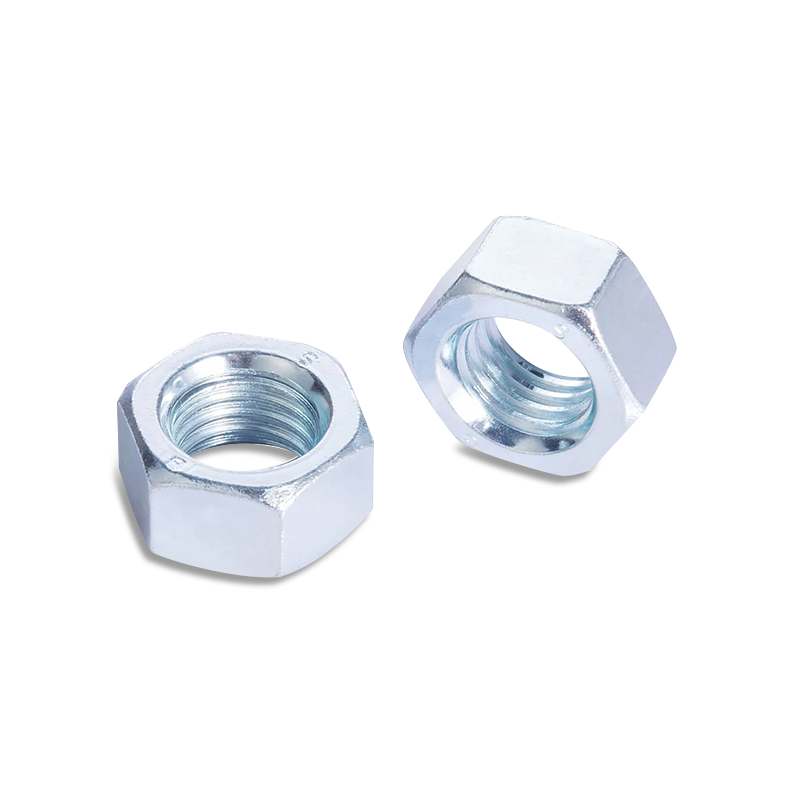
1. Standard Hexagonal Nuts
Description of Standard Hexagonal Nuts
Standard hexagonal nuts are the most commonly used type of fasteners. Their six flat sides make them easy to tighten or loosen with a wrench or other fastening tool. The nut’s internal thread allows it to securely grip a bolt or screw, ensuring a strong and stable connection. These nuts are made from a wide variety of materials, including steel, stainless steel, brass, and plastic, to suit various environmental conditions and mechanical requirements.
Uses of Standard Hexagonal Nuts
Standard hexagonal nuts are primarily used for general-purpose applications where high strength or resistance to extreme conditions isn’t critical. These nuts are versatile and can be found in many industries, including construction, automotive, machinery, and furniture assembly.
- Construction Industry: In construction, hexagonal nuts are commonly used to secure bolts in structural frameworks, ensuring that beams and supports are tightly held together.
- Automotive Applications: In vehicles, hexagonal nuts are used to fasten engine parts, suspension components, and exhaust systems, where vibration resistance is necessary but not extreme.
- Machinery Assembly: These nuts are used in general machinery assembly, where they help hold various parts and components in place, ensuring smooth and safe operation.
Pros and Cons
Pros:
- Easy to use with standard tools.
- Cost-effective for general use.
- Available in a variety of materials and sizes.
- Versatile and widely applicable.
Cons:
- Not ideal for high-stress or vibration-heavy environments.
- Susceptible to loosening if not properly tightened or secured with a washer.
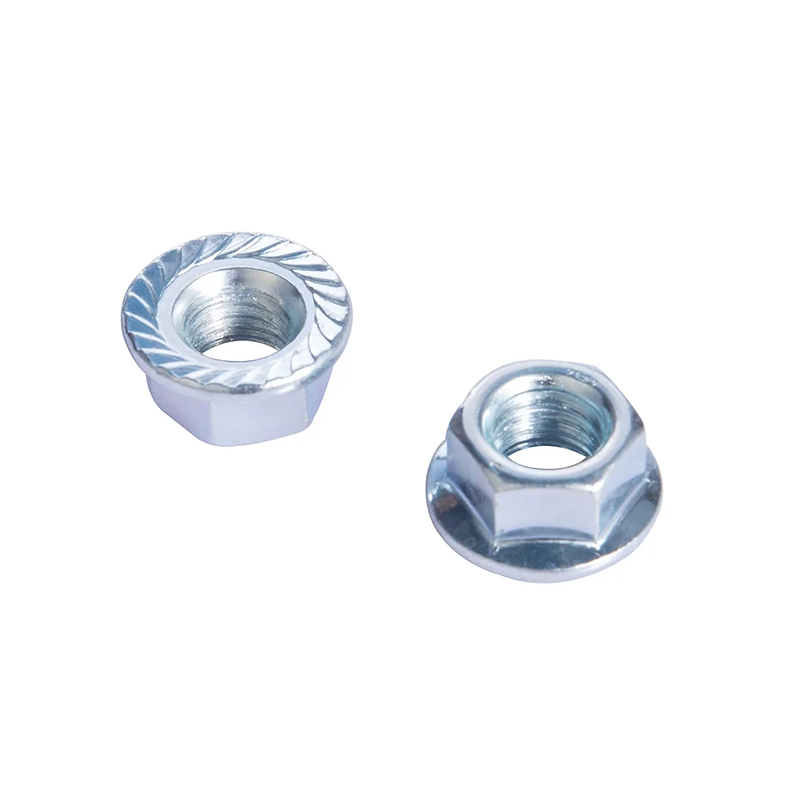
2. Flanged Hexagonal Nuts
Description of Flanged Hexagonal Nuts
Flanged hexagonal nuts are similar to standard hexagonal nuts, but they feature a wide flange at the base. The flange acts like a washer, helping to distribute the load evenly and prevent damage to the surface of the material being fastened. This makes flanged hexagonal nuts particularly useful in applications where extra stability is needed, and the material being fastened may be soft or thin.
Uses of Flanged Hexagonal Nuts
These nuts are commonly used in scenarios where a washer would be necessary, but the flange simplifies the assembly process. The flange eliminates the need for an additional washer, reducing the number of components required.
- Sheet Metal and Thin Materials: Flanged hexagonal nuts are often used when working with thin materials like sheet metal, as they help to spread the load and reduce the risk of the nut pulling through the material.
- Automotive and Machinery: These nuts are widely used in automotive applications to secure engine components, body panels, and exhaust systems.
- Furniture Construction: Flanged nuts are also employed in furniture construction, where they provide an easy and effective way to secure various parts without damaging the wood or other materials.
Advantages and Limitations
Advantages:
- The flange helps distribute pressure evenly across the surface.
- Eliminates the need for an additional washer, making assembly faster and more efficient.
- Provides a more secure and stable fastening solution.
Limitations:
- Flanged nuts are typically more expensive than standard hexagonal nuts.
- Not suitable for very high-stress applications where stronger fasteners are required.
3. Lock Nuts (Nyloc Nuts)
Description of Lock Nuts
Lock nuts, also known as nyloc nuts, are a type of hexagonal nut with a nylon insert inside the threads. This insert helps to prevent the nut from loosening due to vibration or movement. The nylon insert creates friction with the bolt or screw, ensuring that the nut remains in place even under dynamic conditions.
Uses of Lock Nuts
Lock nuts are especially useful in environments where vibration or movement is constant, which can cause traditional nuts to loosen over time. The nylon insert in these nuts provides extra friction and prevents the nut from loosening without the need for additional locking mechanisms, such as washers or thread-locking compounds.
- Automotive and Aerospace: In automotive and aerospace industries, lock nuts are used to secure components that are exposed to significant vibration or movement, such as engine parts, suspension components, and aircraft fastenings.
- Machinery: These nuts are widely used in industrial machinery and equipment, where constant operation can lead to loosening of traditional nuts.
- Heavy Equipment: Lock nuts are often found in heavy equipment, where safety and reliability are paramount.
Benefits and Drawbacks
Benefits:
- Provides an added layer of security against loosening due to vibration.
- Easy to use and install with standard tools.
- Ideal for high-vibration environments.
Drawbacks:
- Nylon insert can wear out over time, reducing its effectiveness.
- Not suitable for very high-temperature environments, as heat can cause the nylon to degrade.
4. Jam Nuts
Description of Jam Nuts
Jam nuts are thin hexagonal nuts that are often used in combination with a standard hexagonal nut. The primary function of the jam nut is to lock the regular nut in place, preventing it from loosening under vibration or stress. Jam nuts are designed to be tightened against the standard nut, creating a double-nut configuration that enhances the overall stability of the fastener.
Uses of Jam Nuts
Jam nuts are commonly used in situations where a space-saving, cost-effective locking mechanism is required. They are typically used in applications where a second, smaller nut can be installed to prevent loosening.
- Automotive Applications: In car engines and suspension systems, jam nuts are used to prevent standard nuts from loosening under vibration.
- Machinery and Manufacturing: In industrial settings, jam nuts are used in machinery and equipment that are subjected to frequent movement or vibration.
- Furniture and DIY Projects: Jam nuts are also used in furniture construction and DIY projects where a secure connection is needed, but space is limited.
Advantages and Challenges
Advantages:
- Space-saving compared to other locking mechanisms.
- Simple and easy to install.
- Cost-effective solution for preventing loosening.
Challenges:
- Not suitable for applications requiring very high levels of vibration resistance.
- May require additional time for installation when compared to using a single nut.
5. Coupling Nuts
Description of Coupling Nuts
Coupling nuts are longer hexagonal nuts designed to connect two threaded rods or bolts. These nuts are typically used in applications where you need to extend the length of a threaded rod or to join two rods together in a straight line.
Uses of Coupling Nuts
Coupling nuts are used in various industries and applications to join two rods or bolts, providing a secure and reliable connection. They are commonly used in situations where extra length is needed for a threaded rod or in applications where traditional fasteners are insufficient.
- Construction and Scaffolding: In the construction industry, coupling nuts are used to extend threaded rods, helping to build scaffolding and other structures that require longer bolts.
- Plumbing and Electrical Systems: These nuts are also used in plumbing and electrical systems to connect threaded pipes or conduits.
- Industrial Equipment: In industrial machinery, coupling nuts can be used to join parts that require precise alignment and secure fastening.
Benefits and Limitations
Benefits:
- Provides a reliable method for extending threaded rods.
- Ensures a strong, secure connection between two rods or bolts.
- Available in various lengths and materials.
Limitations:
- Only useful in applications requiring the extension of threaded rods.
- May not be suitable for high-load or high-stress applications.
6. Heavy Hex Nuts
Description of Heavy Hex Nuts
Heavy hex nuts are thicker and stronger than standard hexagonal nuts. These nuts are designed to withstand heavy loads and provide a more durable fastening solution. Heavy hex nuts are often made from high-strength materials, such as steel or alloy metals, to ensure they can handle the demands of heavy-duty applications.
Uses of Heavy Hex Nuts
Heavy hex nuts are used in applications where a higher level of strength and load-bearing capacity is needed. They are commonly found in structural and industrial applications where standard nuts may not be sufficient.
- Construction: In construction, heavy hex nuts are used to fasten steel beams, columns, and other structural components.
- Oil and Gas: Heavy hex nuts are commonly used in oil rigs and other heavy equipment to secure components under extreme stress.
- Mining and Manufacturing: These nuts are also used in mining machinery and manufacturing equipment, where high strength and durability are crucial.
Advantages and Disadvantages
Advantages:
- Extremely durable and resistant to high stress and pressure.
- Ideal for heavy-duty applications.
- Can withstand extreme environments and heavy loads.
Disadvantages:
- Heavier than standard hexagonal nuts, which can add to the overall weight of the assembly.
- More expensive due to their materials and construction.
 Get In Touch
From concept to production, we cah create the products you want.
 Products
- · SCREWS
- · HEXAGONAL NUTS
- · THREADED BOLTS
- · EXPANSION ANCHORS & PLUGS
- · WIRE SCREW HOOKS
- · SCREW WASHERS
Contact Information Tel: 86-574-62101087
 E-mail: [email protected]
- E-mail: [email protected]
 Add: Xiaocao 'e Binhai Industrial Park, Yuyao, Zhejiang, China
Copyright 2024 Yuyao Cili Machinery Co., Ltd. All Rights Reserved.
 Custom Drilling Screws Manufacturers
Custom Drilling Screws Manufacturers